, ,

What if plastics in the ocean were far more dangerous than we think?
What if plastics in the ocean were far more dangerous than we think?

Not just because they suffocate marine animals.

But because they carry an invisible, chemical… and toxic pollution.

This week, we spoke out against the #TooMuch campaign, which downplays the impact of plastic, particularly on health.

A complex issue, often oversimplified to suit certain interests — especially those of industry.

But science is shedding light on a reality that rhetoric cannot erase.

👉 PlastiDrugs is a research project led by Rafael Trevisan, which we have supported since 2023 thanks to the commitment of our patrons.

Conducted between Brest and Santos (Brazil), it shows that marine plastics are far from inert.

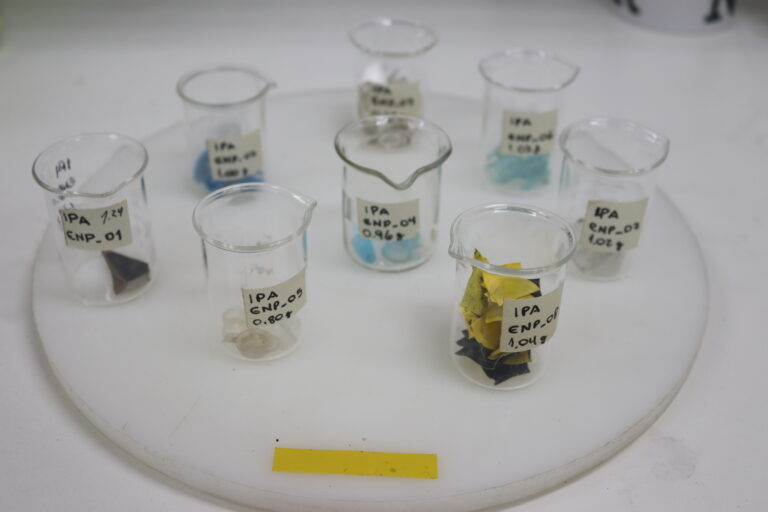
They act as real chemical sponges, capable of absorbing and concentrating residues of pharmaceuticals and drugs.

☠️ Antidepressants. Painkillers. Caffeine. Cocaine. 💊

On some plastics, pollutant concentrations are up to 100 times higher than in the surrounding water.

And when they enter living organisms, the effects are immediate: up to 90% mortality observed in sea urchin embryos.

This pioneering work has already been recognized by the scientific community with several research awards, an extension funded by the City of Santos, and more. The entire team is extremely proud to support Rafael’s work — BRAVO!

This remarkable research reveals what is often left unsaid:

plastic does not only pollute.

It contaminates.

At Pure Ocean, we fund the science that brings clarity to the grey areas of the debate.

Because science should guide the narrative — never the other way around.

, ,

Additives, antibiotics, drugs, microplastics carry more than just plastic.

Additives, antibiotics, drugs, microplastics carry more than just plastic.

Investigation: what if their hidden effects are more dangerous than we think?
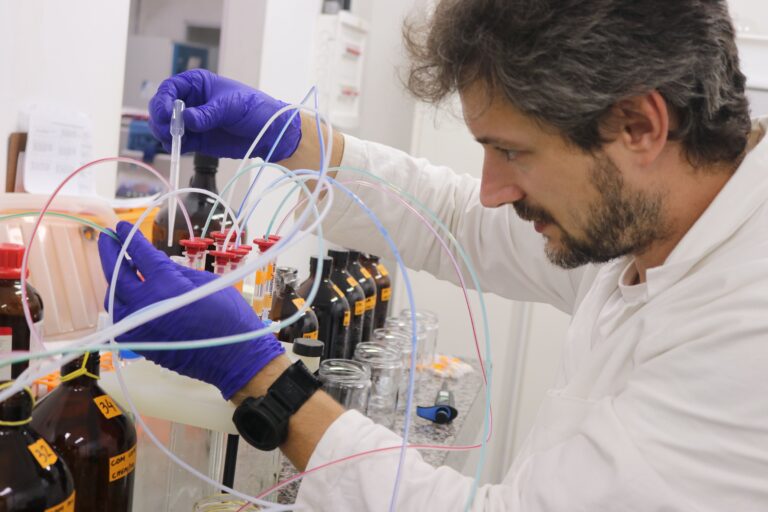
Rafael Trevisan, a postdoctoral researcher in marine ecotoxicology at LEMAR (Université de Bretagne Occidentale), is on the case.

His goal is to understand how plastic particles become true “pollutant rafts” and what consequences this has… all the way to our plates.

With PlastiDrugs, he aims to provide solid scientific evidence to help policymakers tackle this invisible yet formidable pollution.

👉 A pioneering effort supported by Pure Ocean, protecting both the ocean and our health.

, ,

#AdvancedProjects PlastiDrugs: when microplastics meet medicines… and much more!

PlastiDrugs: when microplastics meet medicines... and much more!

While we have just presented the projects for 2025, projects from previous years are celebrating their anniversaries. 🎂

This is an opportunity for Charlie, our scientific coordinator, to take stock with the researchers we support. This time, we’re heading for Brazil and France with Rafael Trevisan, leader of the PlastiDrugs project.

👉 His objective? To understand the cocktail effects of microplastics and emerging pollutants (medicines, drugs, additives) in two emblematic bays:

Santos (Brazil), where wastewater is very poorly treated,

Brest (France), which is more controlled but also heavily urbanised.

💡 His initial hypothesis? Microplastics act like magnets for pollutants, transporting them around the environment… and delivering them directly into the organisms that ingest them.

📊 After 12 months of research:

Numerous pollutants have been found on plastics (including… cocaine, yes, you read that right),

Ecotoxicity tests on sea urchins show real effects on development,

This summer, tests on juvenile oysters and immune cells will complete the picture,

And already a scientific publication in the pipeline!

✨ This project wouldn’t exist without you: your support makes all the difference. Thank you 💙

🔁 Would you also like to support research that has a tangible impact on the health of the Ocean – and our own? Let’s talk about it!