Algae to reduce cow gas?
Yes, really.
When a cow digests, it naturally produces methane, a gas with a very high climate impact. It is responsible for about 30% of current global warming related to greenhouse gases.
Some species of seaweed contain molecules that “calm” fermentation in the stomach, reducing the amount of gas produced during digestion.
When included in the diet in very small amounts, these seaweeds can:
Reduce methane emissions from digestion by up to 80%
Improve digestion
Decrease the climate impact of livestock without harming animal health or production
A powerful way to reconcile livestock farming and climate!
The Regen Ocean Farms project, supported by you since 2024, works with communities in Brazil to develop sustainable, locally grown seaweed for these innovative uses.
A double benefit: creating an economic sector for local communities while having a positive impact on the climate!
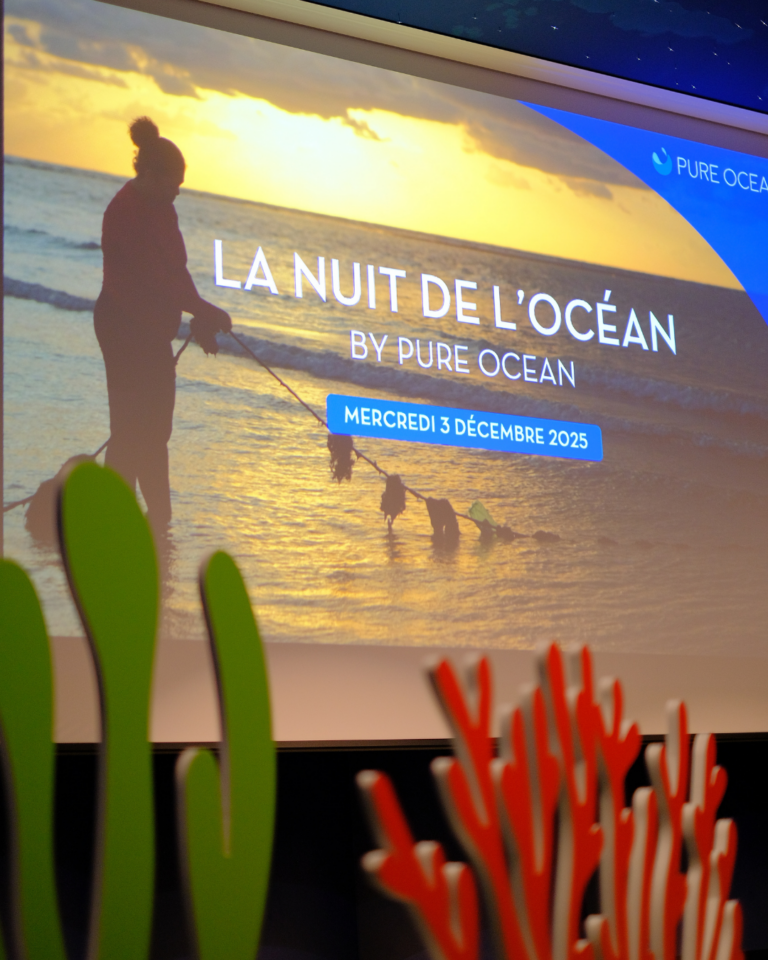
The project will be featured in our upcoming Pure Ocean documentary 2025: Flor Do Mar. Discover it on Wednesday, December 3, at our Ocean Night.
Learn more: https://www.pure-ocean.org/regen-ocean-farms/

Medical treasures lie hidden in the shadows of the ocean.
Between 0 and 200 meters deep, we find marine animal forests: a very rich ecosystem made up of sessile organisms like sponges. And yes, they are animals ☝️
🦠 Lacking mobility, they have developed unique defense strategies against bacterial attacks, notably through toxic molecules. These living libraries are a goldmine of bio-inspiration for the medicine of tomorrow!
Camille Clerissi, senior lecturer at the École Pratique des Hautes Études, and her team are working with Under the Pole to map the bacteria and molecules of sponges from Svalbard to the Caribbean.
Thanks to your support, the Genesis project aims to identify compounds that could inspire innovations to revolutionize medicine or green chemistry in the future.
👉 Exploring the ocean also means preparing the innovations that will change our lives. Camille explains it all in this video!
2nd place at the Transat Café L’OR!
Pierre Quiroga, Pure Ocean ambassador, signs a superb performance by finishing 2ᵉ of the famous Transat Café L’Or in an Ocean Fifty.
Alongside Gaston Morvan, the two skippers of the WeWise Sailing Team crossed the Atlantic carrying the Pure Ocean colors high.
A remarkable human and sporting adventure ofdaring, mastery and passion for the ocean.
Bravo Pierre and Gaston! We’re very proud of you.


When marine habitats disappear, life collapses.
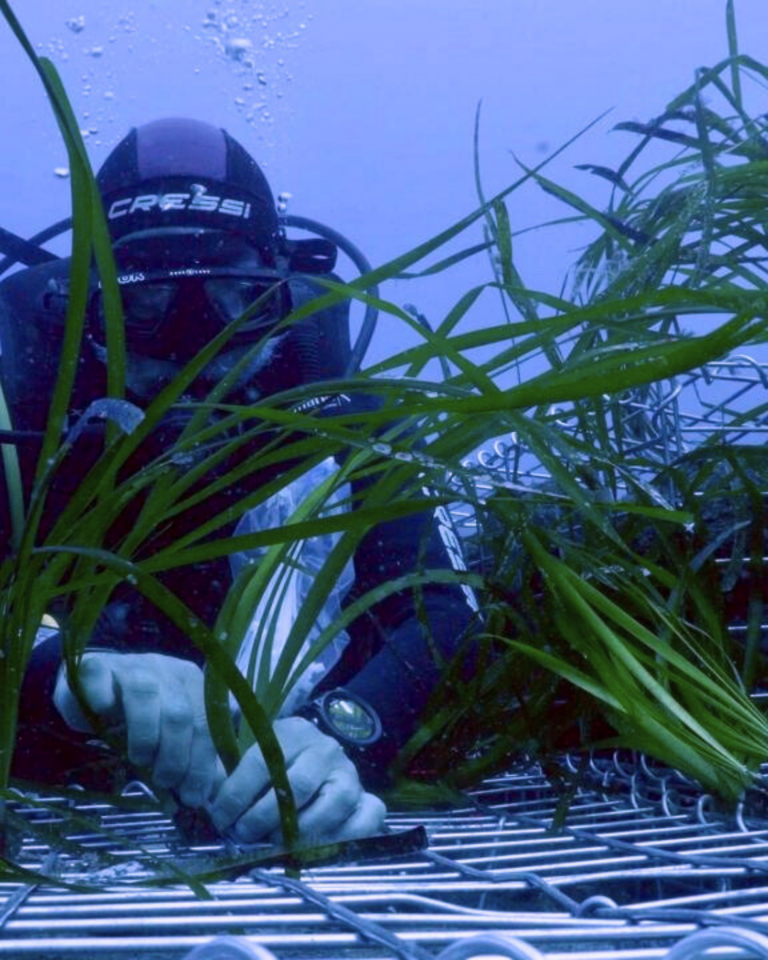
On the island of Pantelleria, Agnese Riccardi, PhD in marine ecology at the Polytechnic University of Marche, is investigating the disappearance of seagrasses, sponges, and gorgonians that structure Mediterranean seabeds.
🌿 With the PANTHER project, her team restores these key species to bring coastal habitats back to life and offer a future to local fishers. 3D photogrammetry, scientific monitoring, and community involvement make science a tangible lever for resilience.
👉 To learn more, discover Agnese on video!
Why not spend an evening immersed in ocean science?
On Wednesday, December 3, Pure Ocean invites you to Ocean Night, an evening where scientific research and emotion come together.
This year, our focus is Brazil:
Indeed, our Pure Ocean Documentary takes you to the heart of Northeast Brazil, where Meire Costa is reviving seaweed farming to heal the ocean and bring new life to coastal communities. This is the Regen Ocean Farms project, one of our 2024 award winners.
Flor do Mar is a testament to innovation and resilience, reminding us that ocean regeneration is possible and that every initiative can become the starting point for global change.
A documentary produced by ZEKEFILM promises to combine science and emotion to showcase the impact of this innovative project!
During this journey, we will also take a moment to review our work: presenting past actions, the progress of projects supported by your donations, and inspiring testimonials.
In short, a wonderful evening for Pure Ocean Lovers to close the year together.
Wednesday, December 3, 2025.
Registrations: https://www.eventbrite.fr/e/billets-nuit-de-l-ocean-2025-1734409177539 – Please note, ticket sales will close two days before the event. In case of cancellation, please notify us before this deadline.
A huge thank you to our generous patron Banque Populaire Méditerranée (BPMED) for hosting us at their premises.
Reserve your evening!
Halloween 2025
Halloween 2025
🎃 Amid all the horrors of the moment, we preferred to spread a wave of sweetness for Halloween 💦
Here are some of our favorite sea monsters – 100% cute, 0% scary!
🔥 The Hypselodoris picta, a flamboyant sea slug, draws its toxicity from the sponges it eats, a true chemical shield against predators.
🐴 The pygmy seahorse, masters of camouflage, are so tiny they could fit on a fingernail.
🐑 The nudibranch “Shawn the Sheep,” a star of tropical reefs measuring barely 5 mm, ingests chloroplasts from the algae it eats. The result: it can perform photosynthesis.
🐡 The pufferfish, looking like an adorable little baby, is actually 1,200 times more toxic than cyanide!
🦎 The axolotl, the eternal one, capable of regenerating its limbs, organs, and even parts of its brain!
Because even in the midst of horror, nature remains full of beauty. 🌊💙
👉 And you, which is your favorite “sea monster”?


Can we still save corals in the face of global warming?
According to the latest Global Tipping Points Report from the University of Exeter, tropical coral reefs are dying on a massive scale.
➡️ Today, at +1.4°C, we have already crossed the critical threshold.
If we don’t reduce our emissions and reach +1.5°C, coral reefs will have a more than 99% chance of tipping, a point of no return for these essential ecosystems.
It is urgent to find more systemic and long-term solutions.
❌ There’s no point in transplanting doomed corals.
At Pure Ocean, we support scientific approaches that rethink reef restoration from the ground up:
💡 Reef Reborn: boosting coral reproduction with a lipid cocktail to increase larval survival rates. This also makes them more resilient to warming – UTS
🪶 Birds on Sticks: strengthening reefs by restoring the entire ecosystem, from corals to seabirds. More birds = more nutrients = healthier, more resilient corals – University of Essex
🧬 SymbioSwap: the first step in coral death is the loss of symbiotic algae due to heat. This project investigates whether warm-water algae could offer hope for the adaptation of temperate corals, such as those in the Mediterranean – University of Perpignan
🐠 Yaf Keru Impact: heat sensitivity is worsened by human pressures and destructive fishing practices. Yaf Keru Impact shows that by choosing more sustainable methods (no dynamite, no cyanide), reefs and the services they provide can come back to life – Planète Mer
🧭 It’s time to activate positive tipping points.
Every innovation, every project, every donation can help tip the balance in the right direction.
👉 Support the science that helps reefs adapt to climate change.
Yesterday, we teamed up with the living, and it was a great collective victory!
What a joy to be part of this buzzing ecosystem of ideas and energy, where scientists, companies, and committed actors come together around a shared conviction:
Protecting nature means drawing inspiration from it.
Congratulations to Alain Renaudin and the entire Biomim’expo team for an outstanding organization – 1,300 participants, 130 exhibitors, 80 speakers, all in perfect symbiosis with life.
Thank you to everyone who visited the Pure Ocean booth to engage, play, and marvel during our three ocean quiz sessions, raising awareness among both young and old.
And a huge thank you to Planète Mer and Mickaël Racine, leader of the Yaf Keru Impact project, for his passionate discussions on coral restoration in Raja Ampat.
It was also a great opportunity to meet our partners, patrons, and project leaders, like our booth neighbors Rougerie Tangram, showcasing the Floating Reef. Our whole circle of Pure Ocean Lovers was gathered.
Together, we continue to team up with nature to shape the future.
And you, will you join the team?


What if our emotions changed the way we understand science?
Today, we visited the leaders of the MICROCEAN project, supported by Pure Ocean since 2024, for an experience as immersive as it was scientific 💡
🧠 Their mission: to make the essential role of plankton in climate regulation understandable—a topic that can sometimes feel distant or complex.
But what if we approached it differently… through emotion?
That’s exactly the goal of their experimental event EMOCEAN:
👉 studying the impact of emotional conditioning on the assimilation of ocean-related scientific data.
In other words, do we learn better when we feel?
We dove into a sensory and scientific journey: images, sounds, videos, infographics, hands-on activities… and even a magical moment of marine bioluminescence! ✨
Followed by a questionnaire to share our impressions and contribute to their psychological science study.
👏 Congratulations to Fanny and Pauline, PhD students at the Laboratory of Social Psychology (LPS) and the Mediterranean Institute of Oceanology (MIO), for this inspiring and innovative project.
📅 Want to participate? The EMOCEAN experience is open to the public until October 31 at the CUBE, on the Aix-en-Provence campus.