

An ecological mooring buoy to help Posidonia meadows and their biodiversity
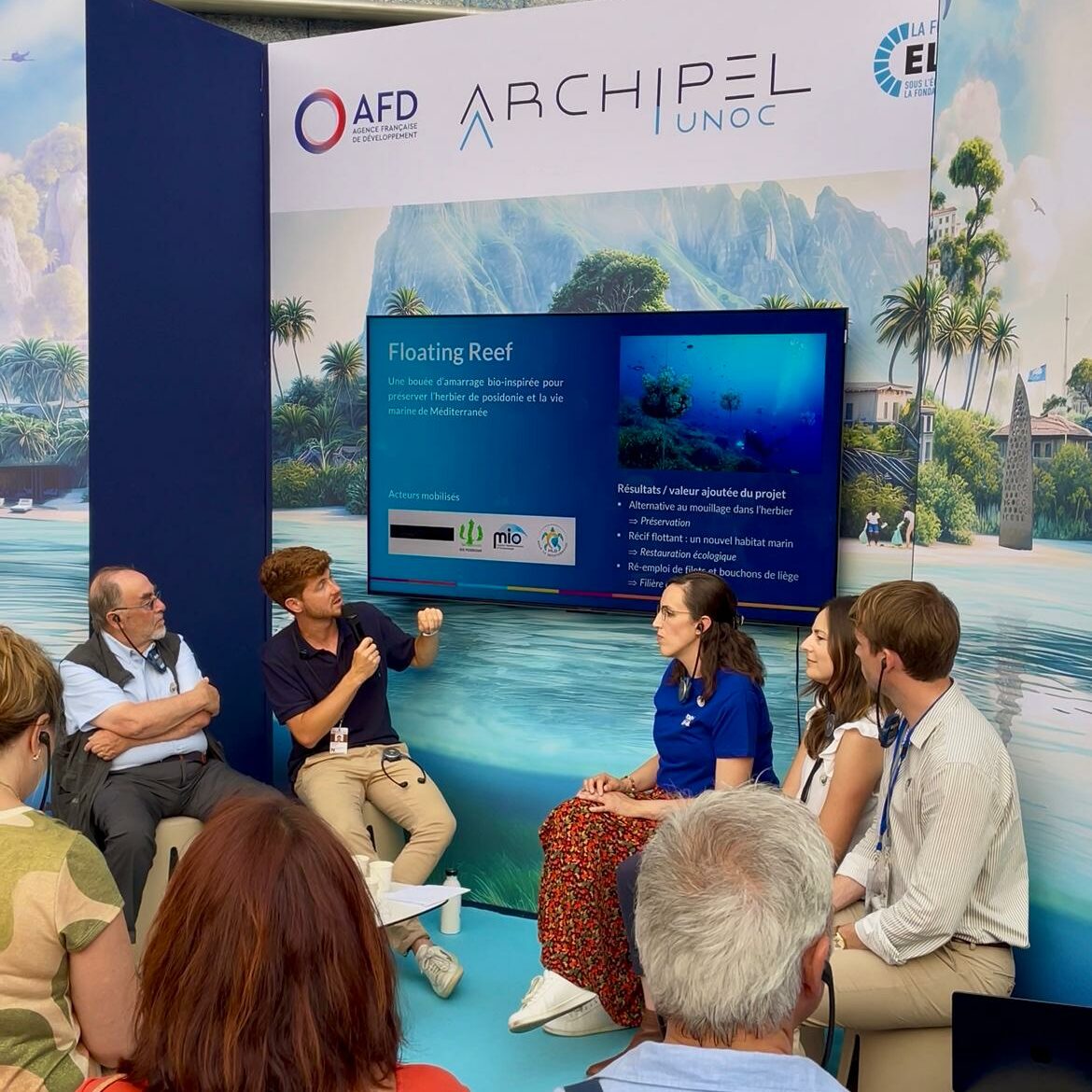
The Floating Reef project
CONTEXT AND MAIN ISSUES
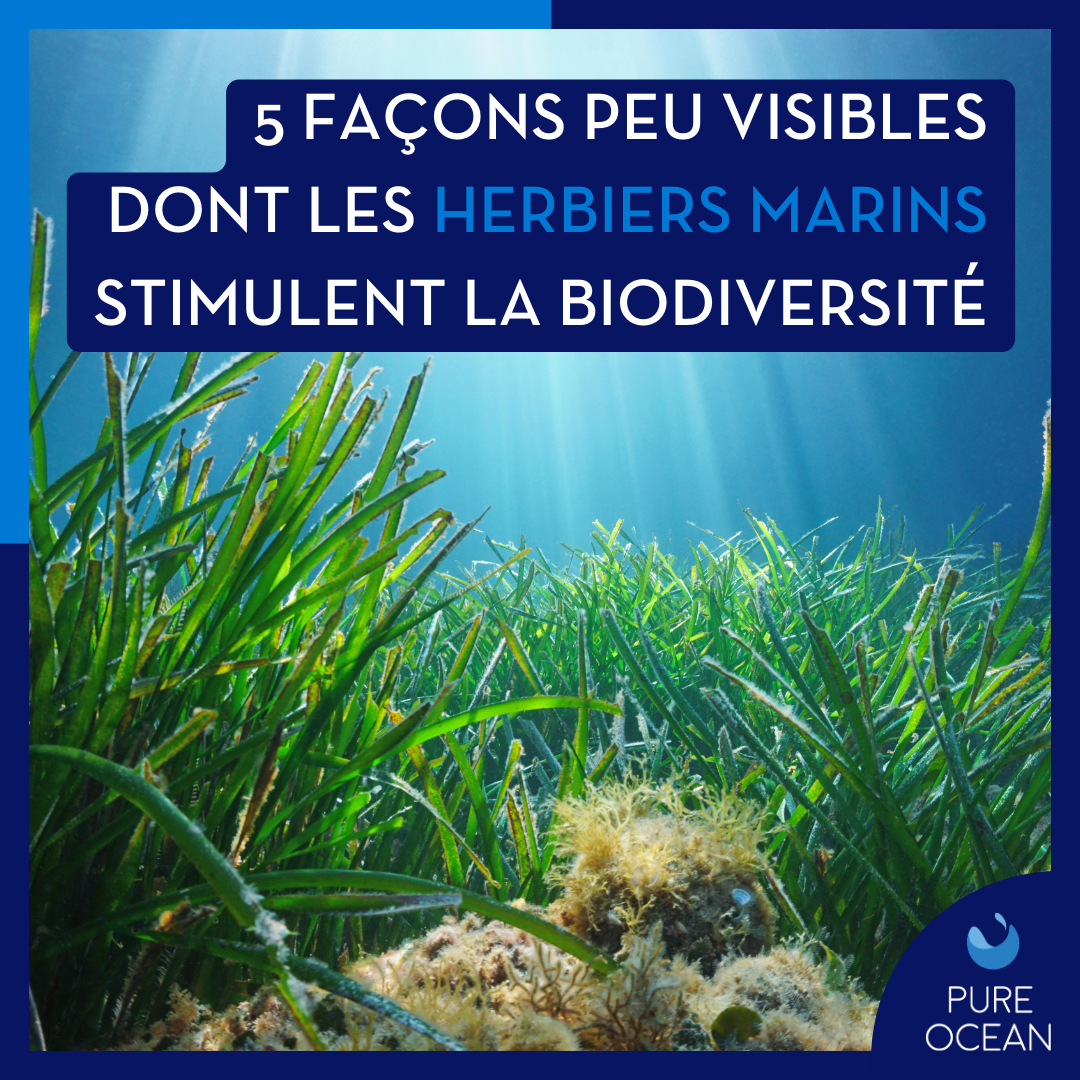
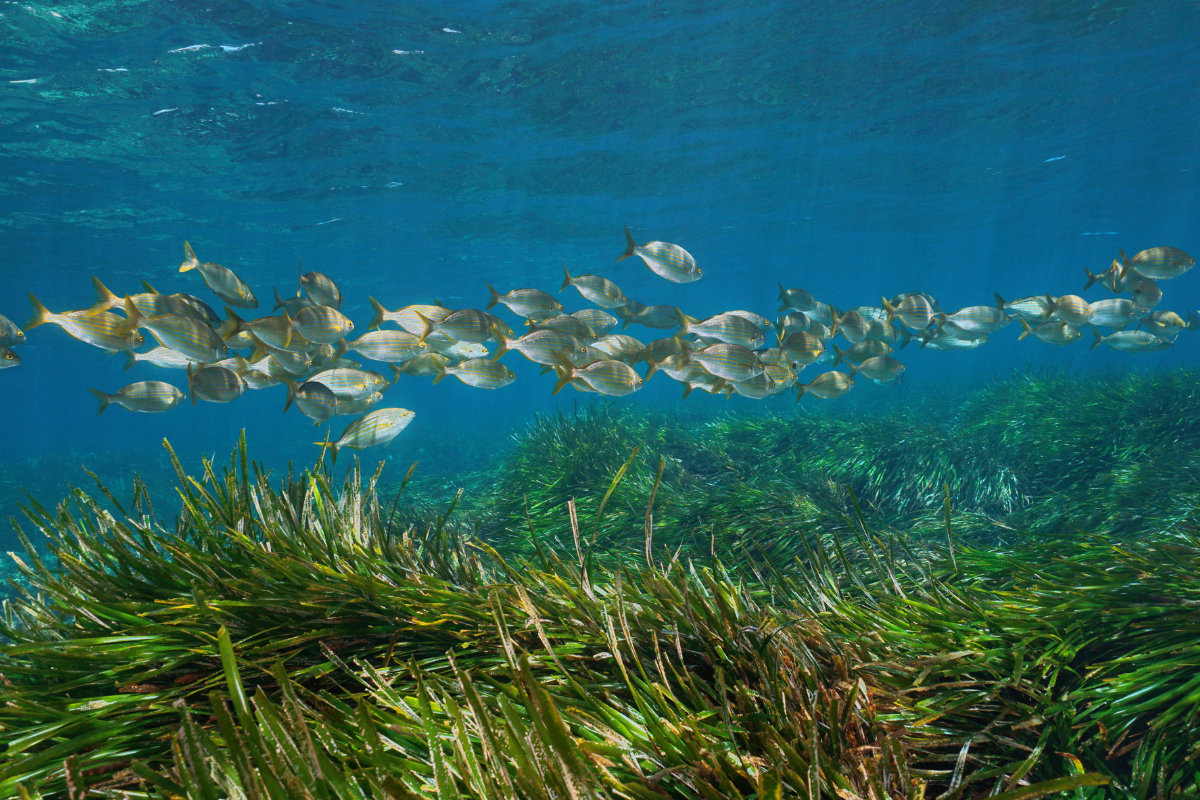
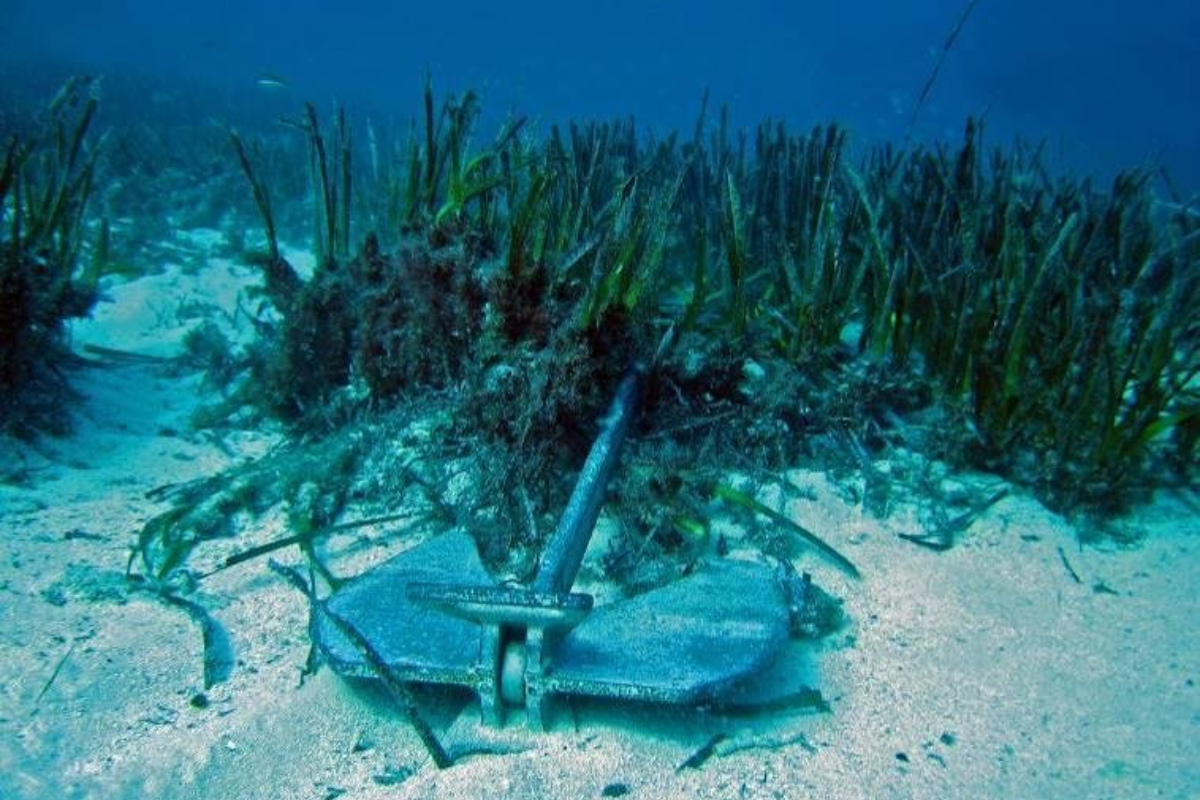
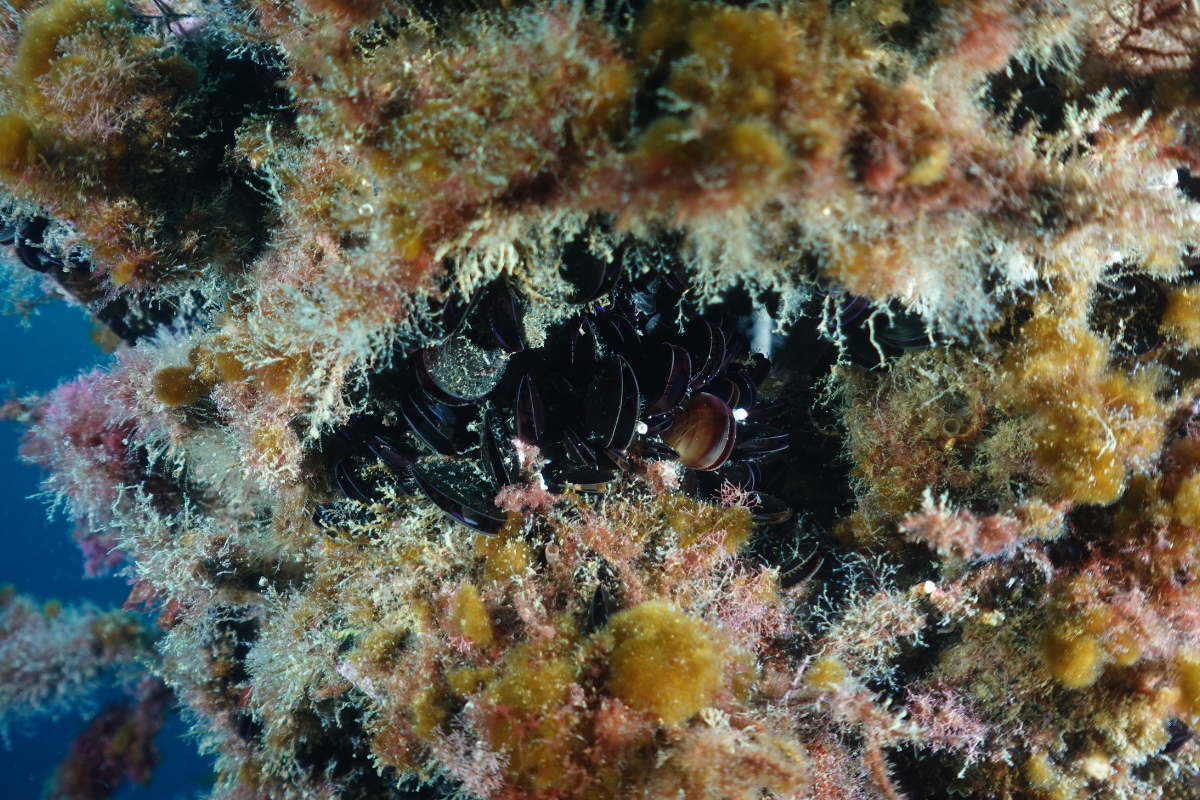
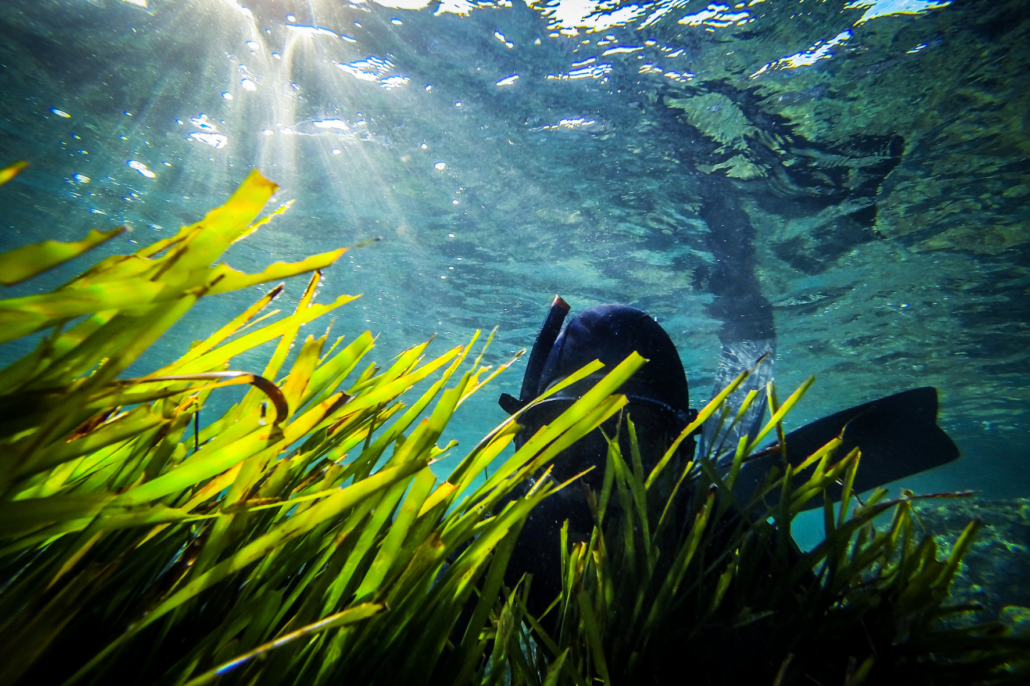
In the Mediterranean, the repeated anchoring of pleasure boats contributes to the degradation of precious Posidonia meadows. These habitats, among the most productive on the planet, cover less than 3% of the Mediterranean surface, but are essential for 30 to 40% of local species, providing shelter and support for all or part of their life cycle. They provide numerous ecosystem services: carbon fixation in their root network (“matte”), water oxygenation, sediment stabilization, coastal protection against erosion and wave and storm attenuation. Regrowth is very slow: the meadow grows horizontally by a few centimetres a year, and vertically by a metre a century. As a result, 10% of seagrass beds have already disappeared, representing an estimated economic loss of 4 billion euros per year.
Current solutions, such as fixed mooring buoys or “ecological moorings”, are effective but often stem from the petrochemical industry and require regular maintenance. Floating Reef aims to overcome these limitations by proposing a more sustainable concept that benefits biodiversity.
GOALS
Design a subsurface mooring buoy to preserve Posidonia meadows and promote local biodiversity.
METHOD
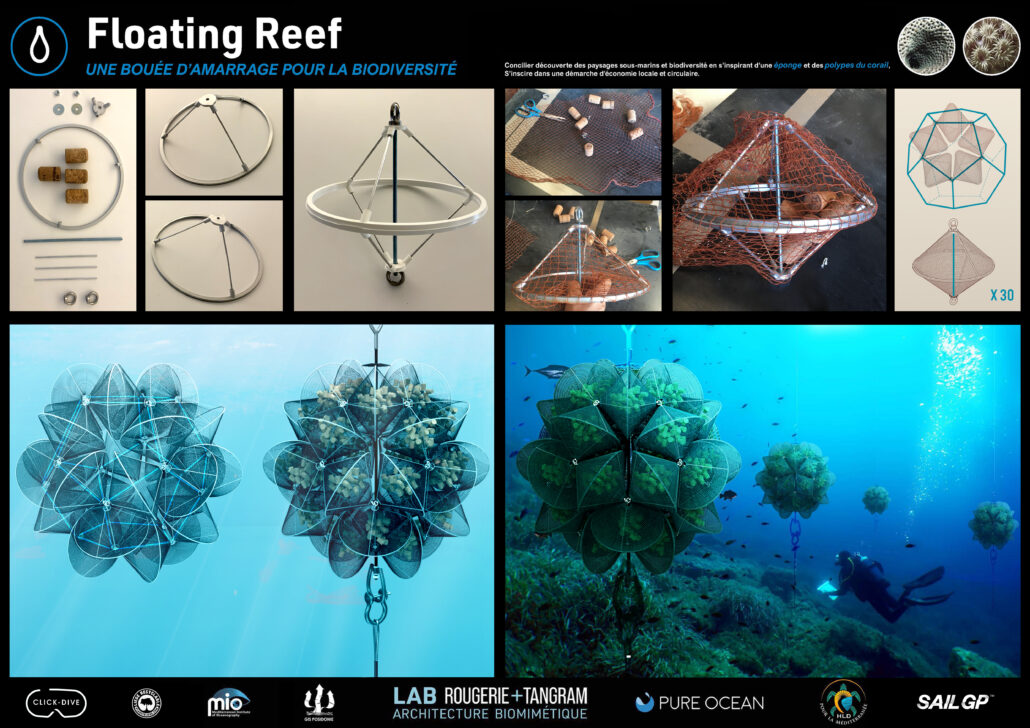
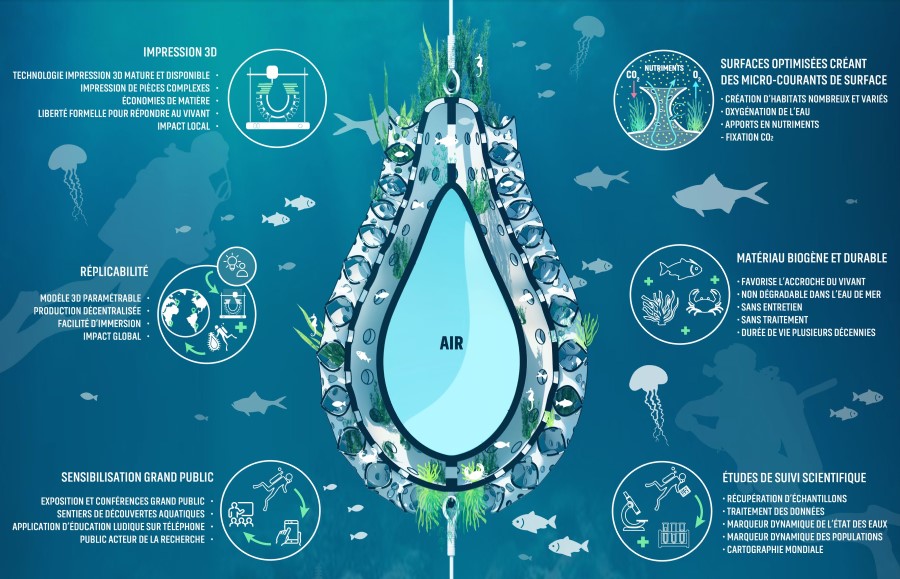
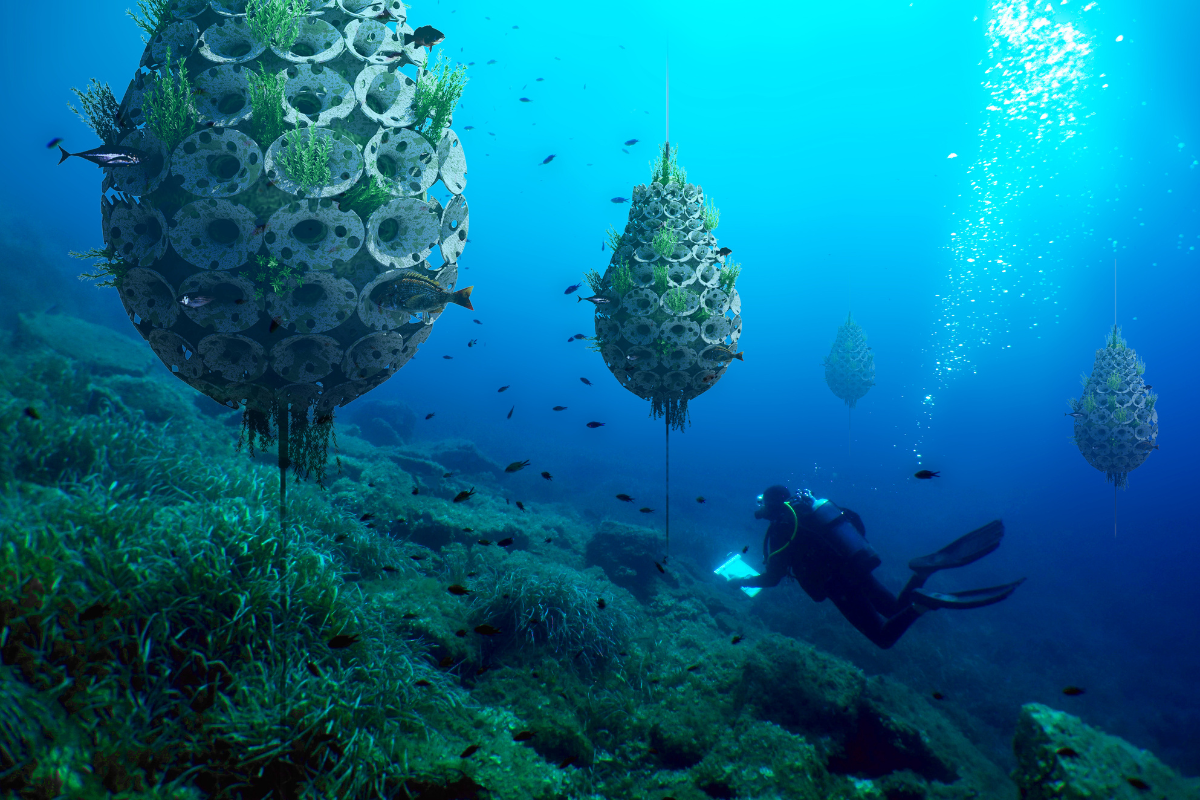
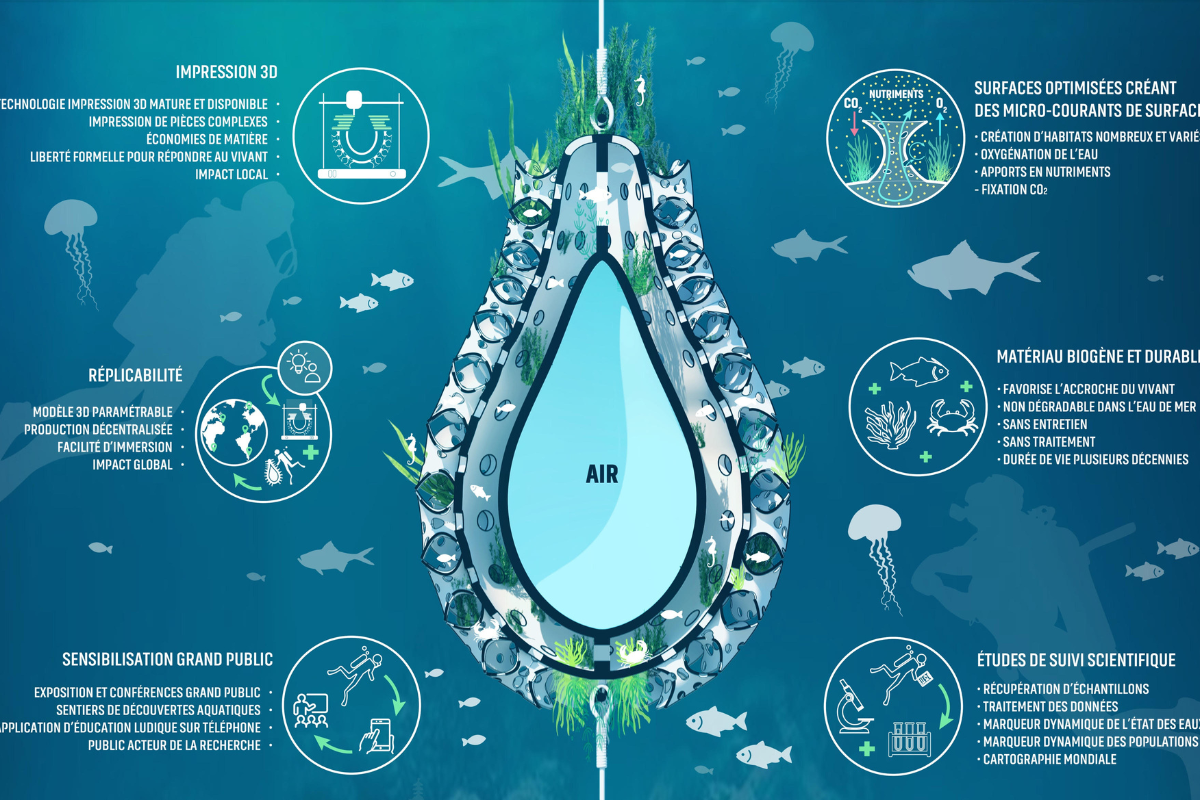
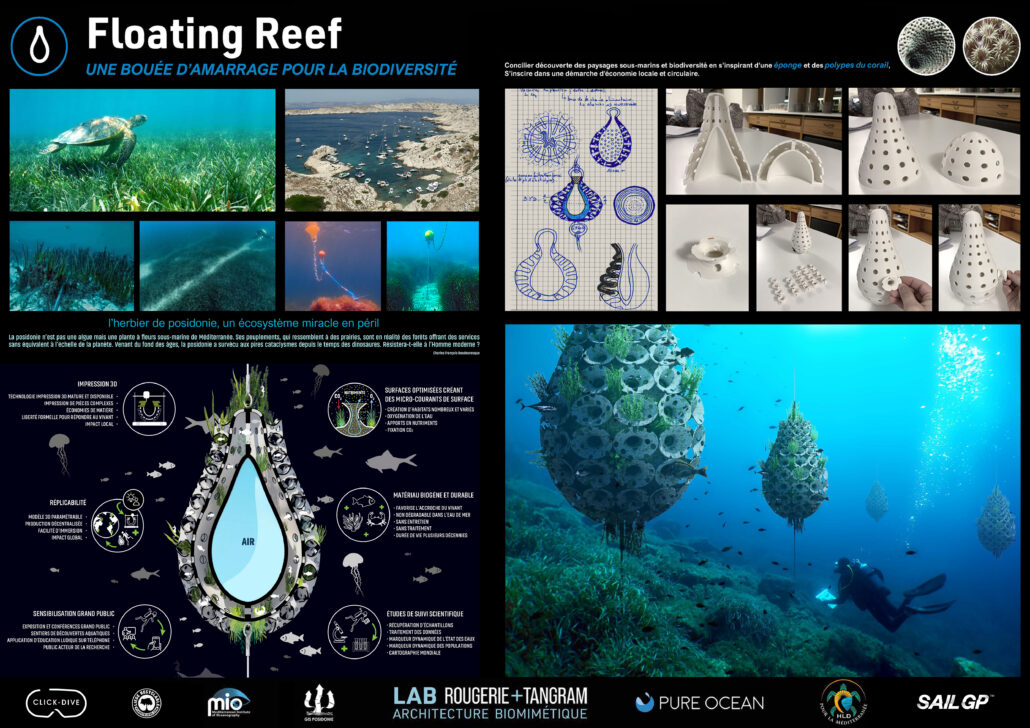
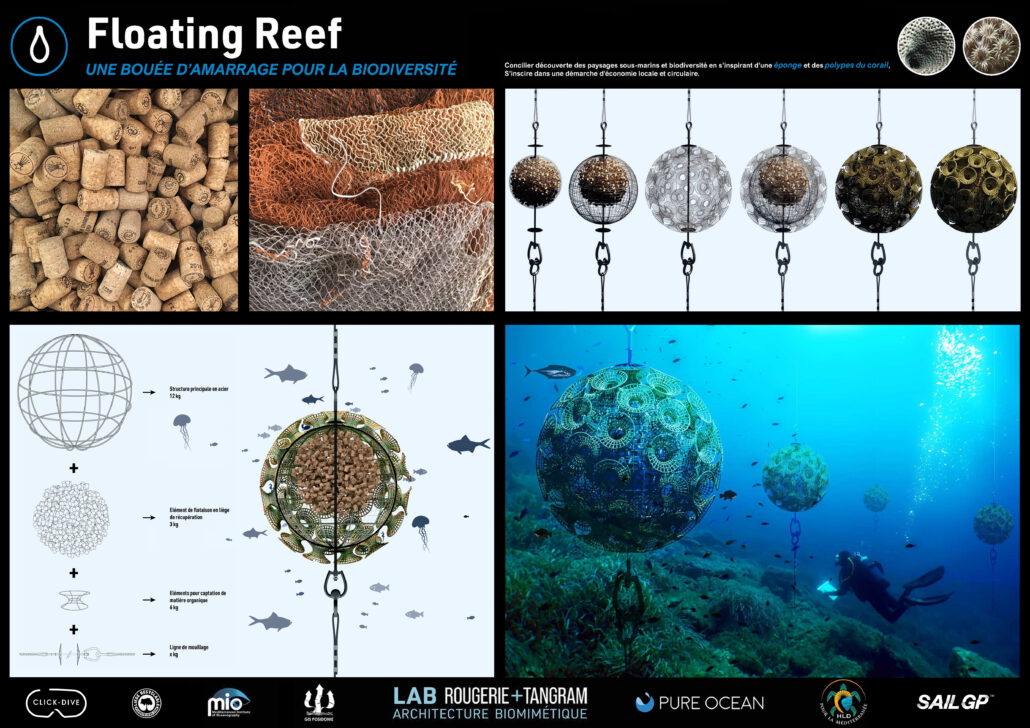
The project involves the development of a biogenic, eco-designed floating reef buoy between two waters, made from 3D-printed biopolymers and recycled materials. Its multi-faceted structure provides catchment areas for local flora and fauna, creating a refuge for plant and animal species.
Several buoys can be deployed in the same area to form an educational underwater trail designed to raise public awareness of biodiversity conservation. Scientific monitoring is planned to assess the ecological effectiveness and long-term sustainability of the buoys. This low-carbon, low-maintenance concept is designed to be easily replicated worldwide.
HOW IS THIS PROJECT INNOVATIVE?
Floating Reef combines biomimetic engineering, sustainable materials and ecological conservation to transform a simple mooring tool into a multifunctional artificial reef. The buoy not only protects Posidonia meadows, it also creates a habitat for local biodiversity, reduces carbon impact thanks to its materials, and can be deployed as an educational tool. Its floating, sustainable design makes it easily replicable on a global scale, offering an innovative solution to a major ecological problem.
Graphic summary
NEWS

Project duration
2021 – 2026
SUSTAINABLE DEVELOPMENT GOALS


Results and advances
Phase I: engineering project developments
From a concrete sponge buoy… (1st generation)
The floating artificial reef was initially designed in 3D-printed concrete to mimic the internal organization of Ascon sponges. This biogenic structure was designed to maximize the surface area colonizable by marine life, while ensuring its viability (gas exchange, nutrient supply, etc.).
… to a sphere of polyps … (2nd generation)
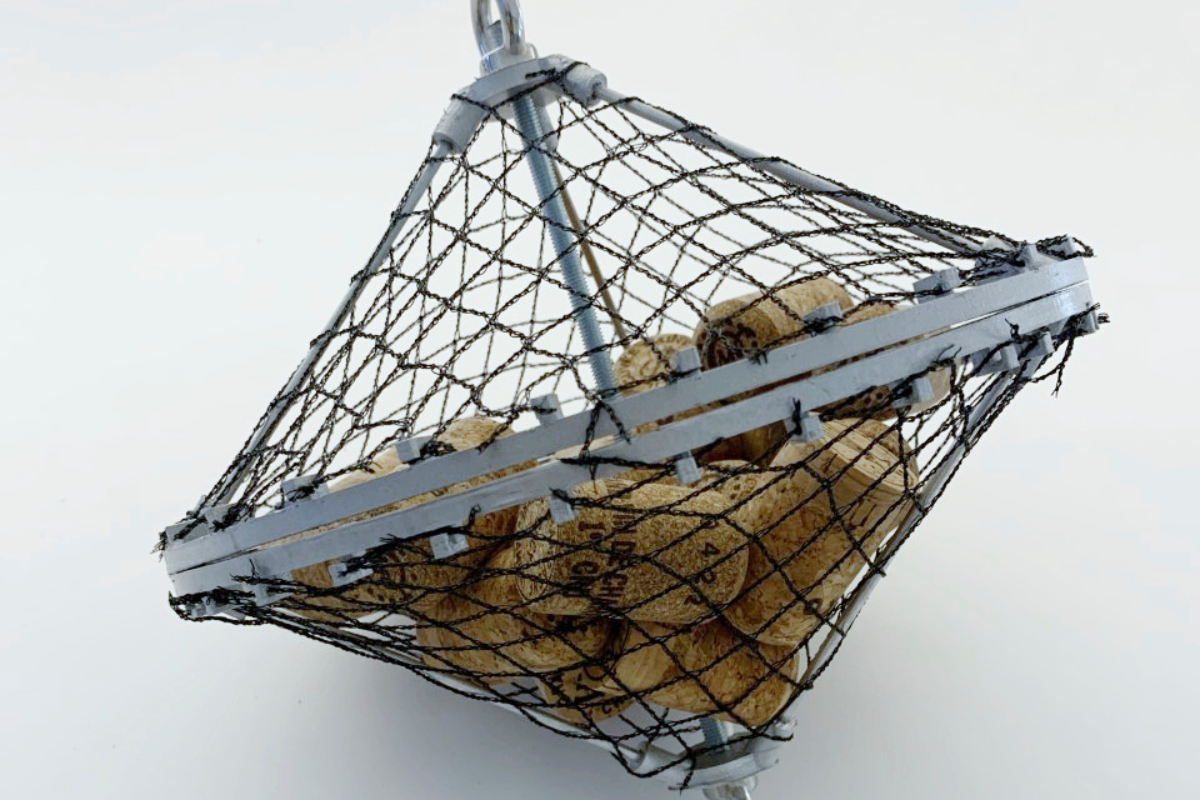
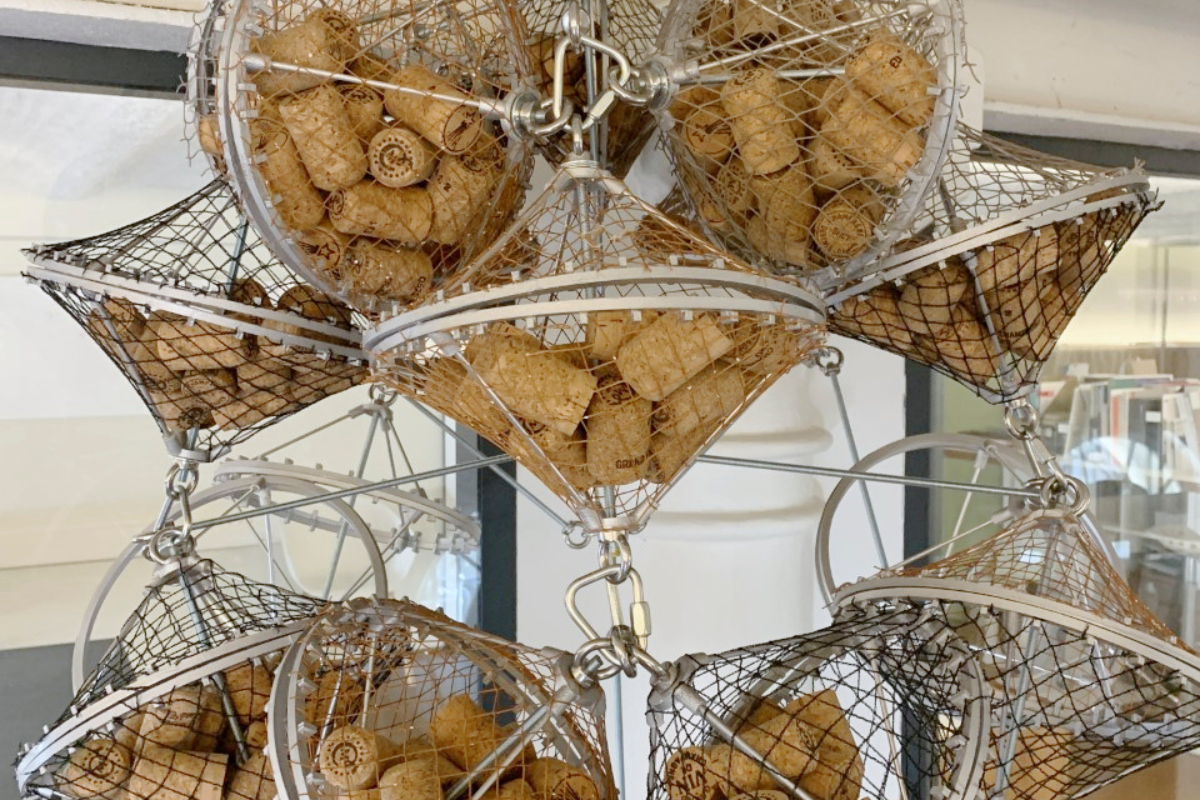
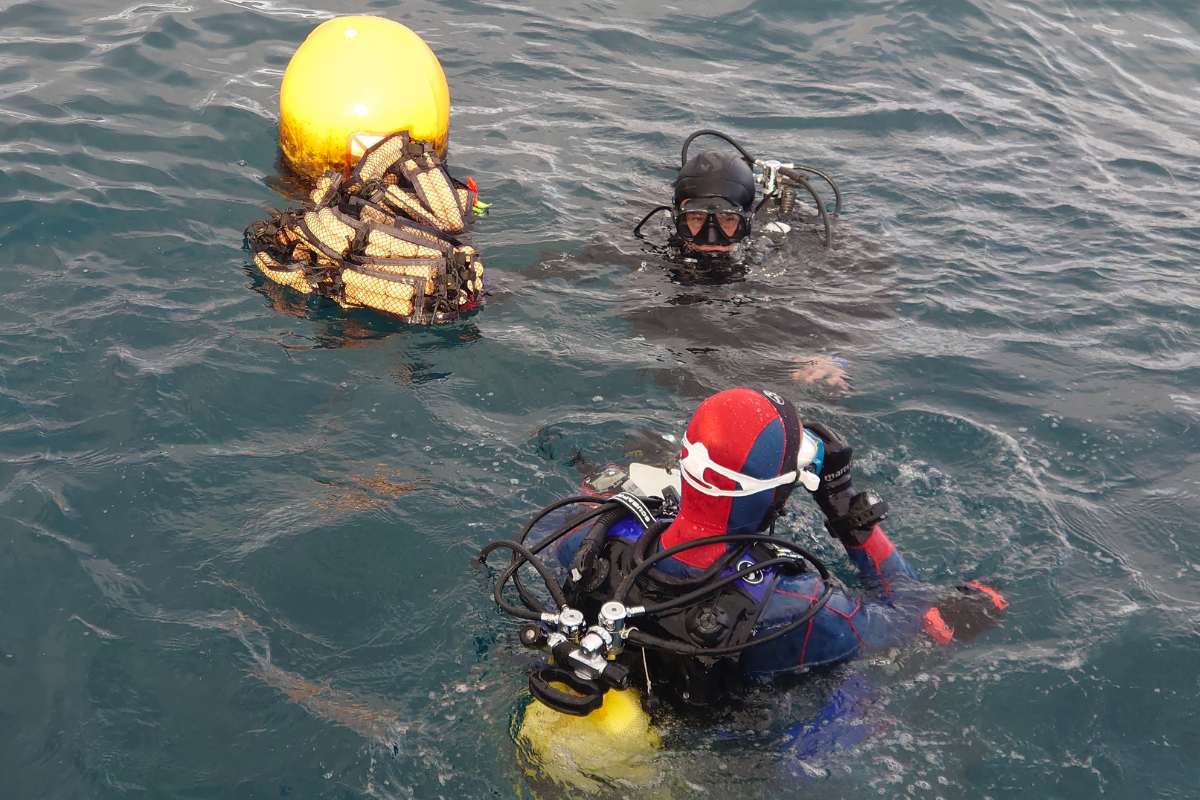
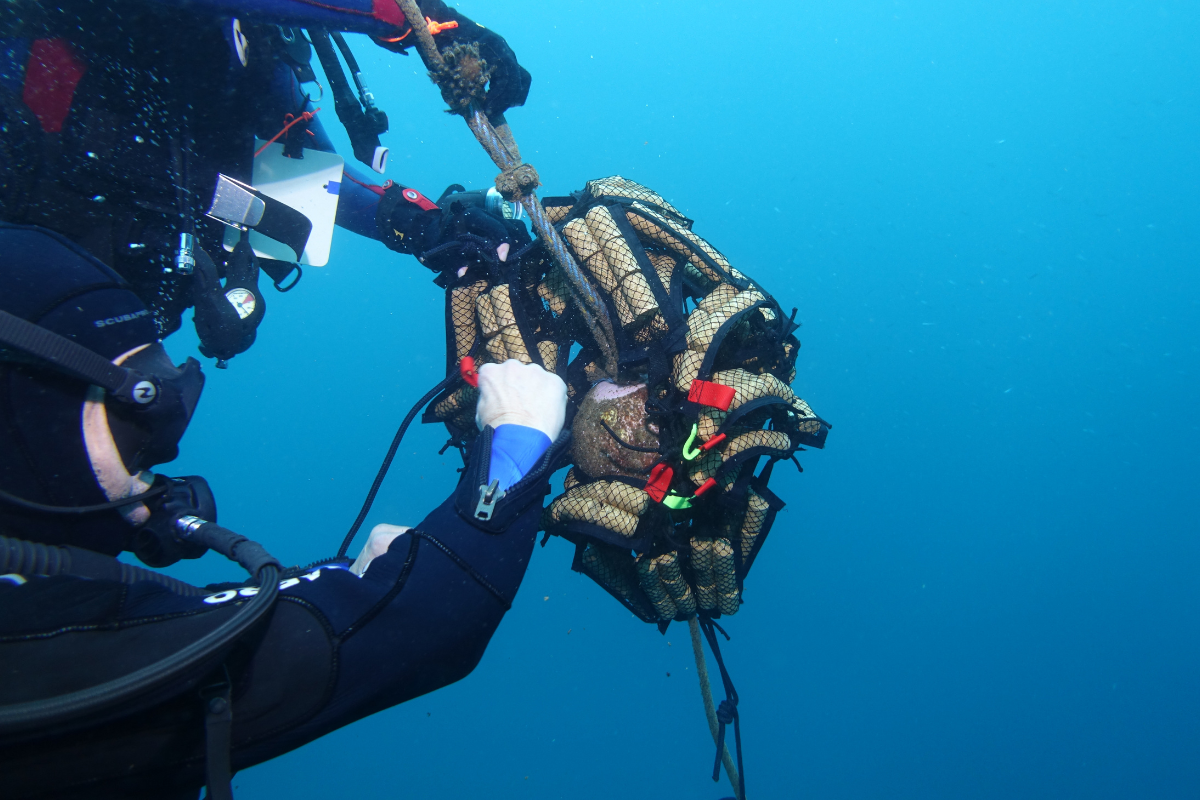
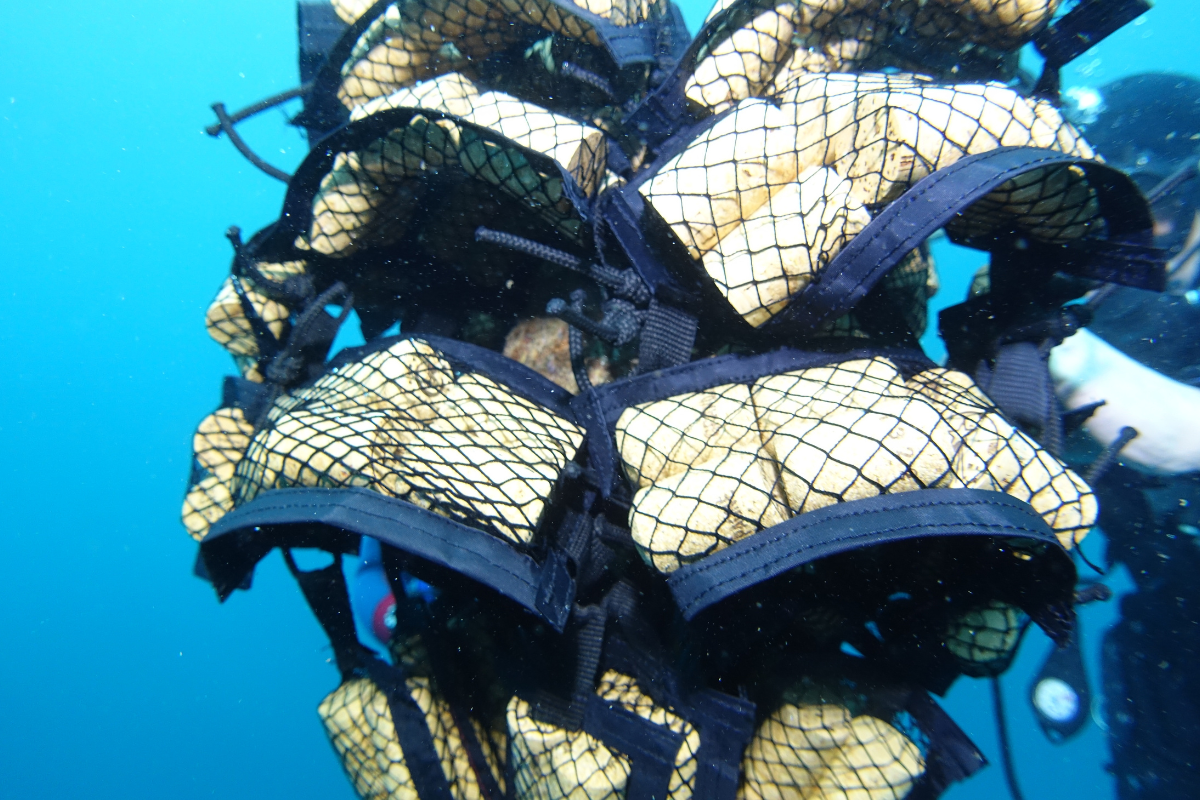
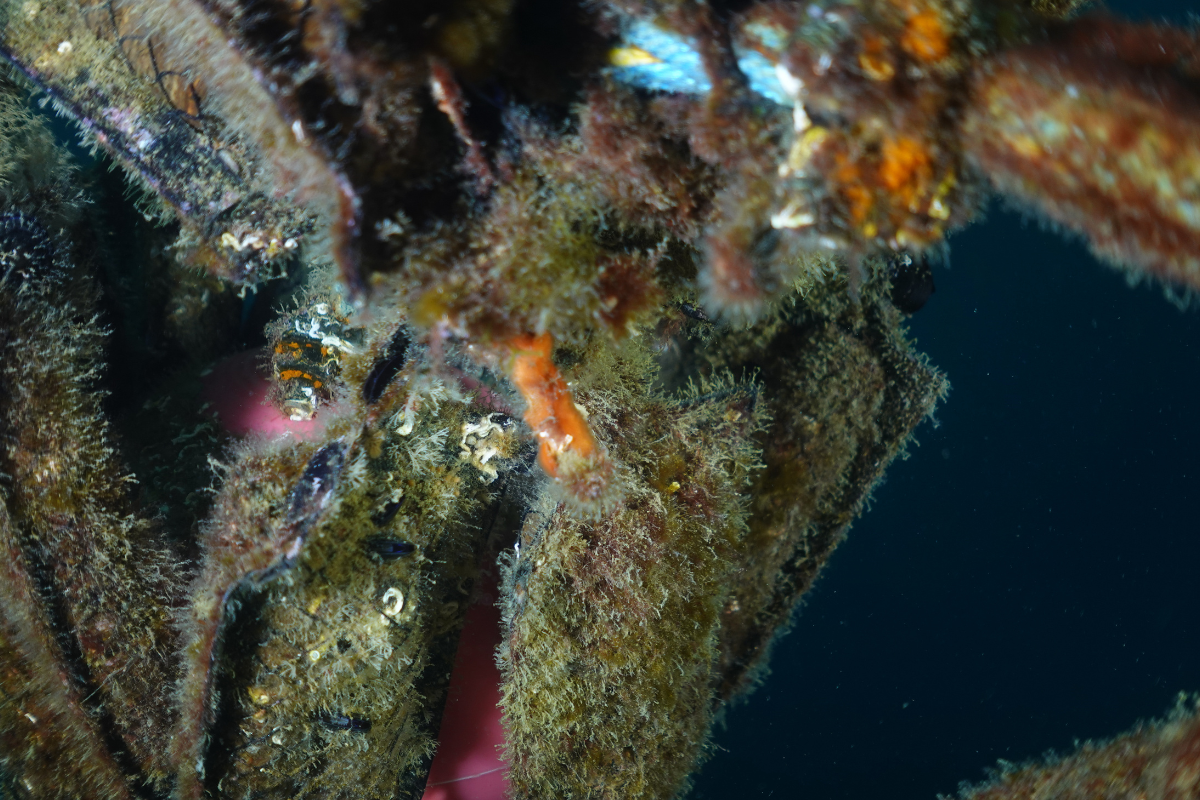
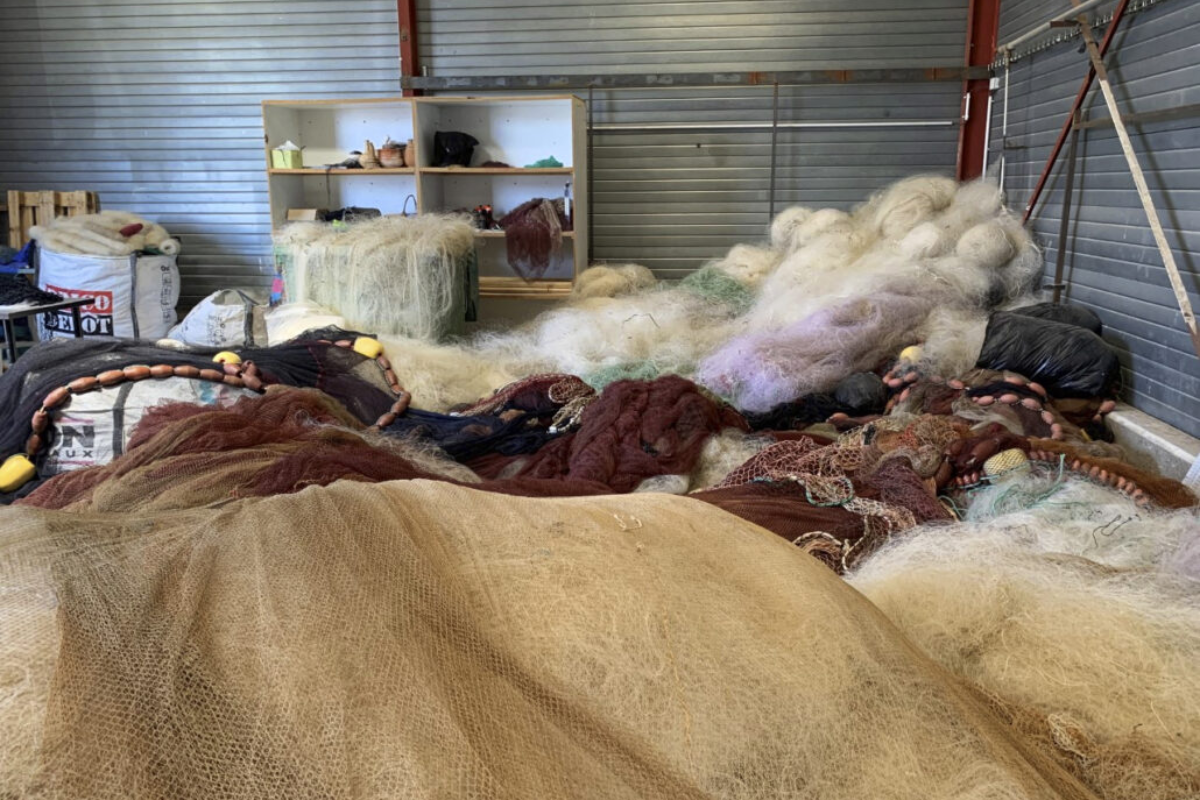
A second engineering phase led the architects to lighten and simplify the concrete structure for a metal-framed sphere. The structure’s buoyancy is ensured by corks contained in an assembly of nets made from local fisheries waste. Modules inspired by Mediterranean coral polyps enable gas and nutrient exchanges with the surrounding habitat, providing hiding places and shelter for small invertebrates and juvenile fish.
… to reusable metal modules. (3rd generation)
Final developments further lighten the floating reef by limiting the use of metal frameworks with 3D-printed biopolymer modules. The corks are now contained within multiple modules, whose precision assembly solidifies the whole structure, allowing water to flow through the reef.
The spaces available for living are maximized in a sustainable structure, making the most of reused local materials.
Phase II: study of the deployment of experimental buoys in the Mediterranean (2023)
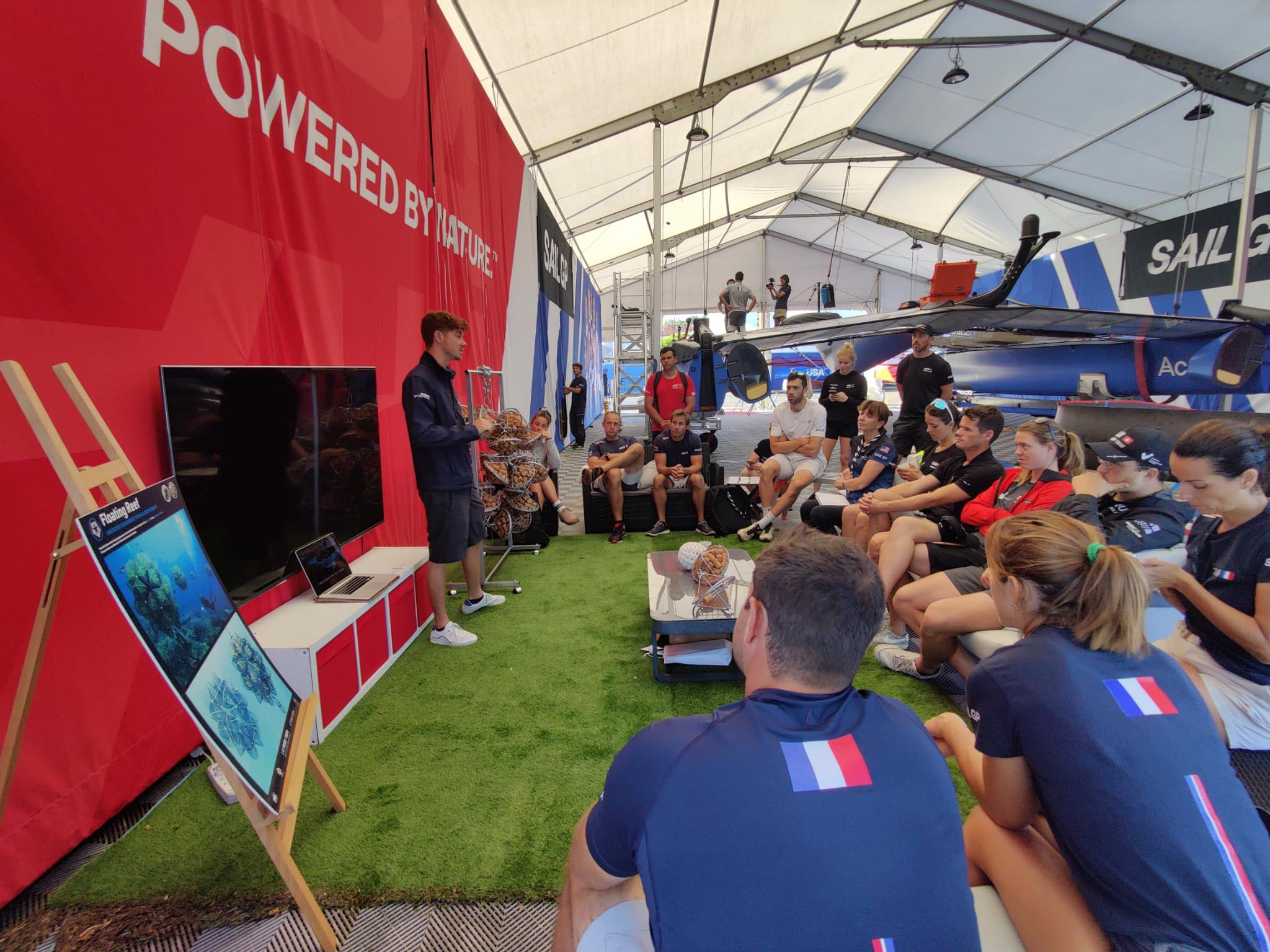
The first Floating Reef prototype is unveiled in September 2022 in St-Tropez, in front of international Sail GP crews (partner event of the project) and local maritime actors.
Experimental buoys on a 1:1 scale are being built over the winter of 2022-23, for immersion during 2023. Several sites are being studied for these first iterations.
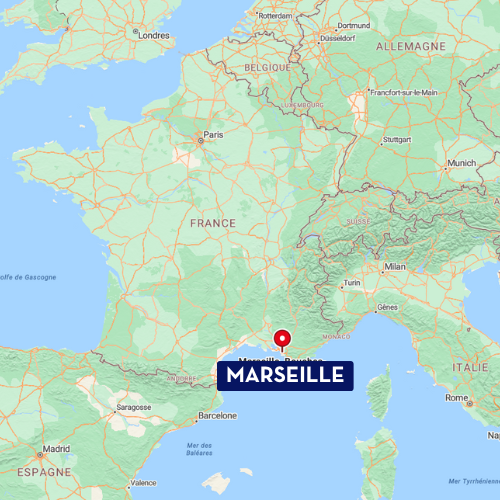
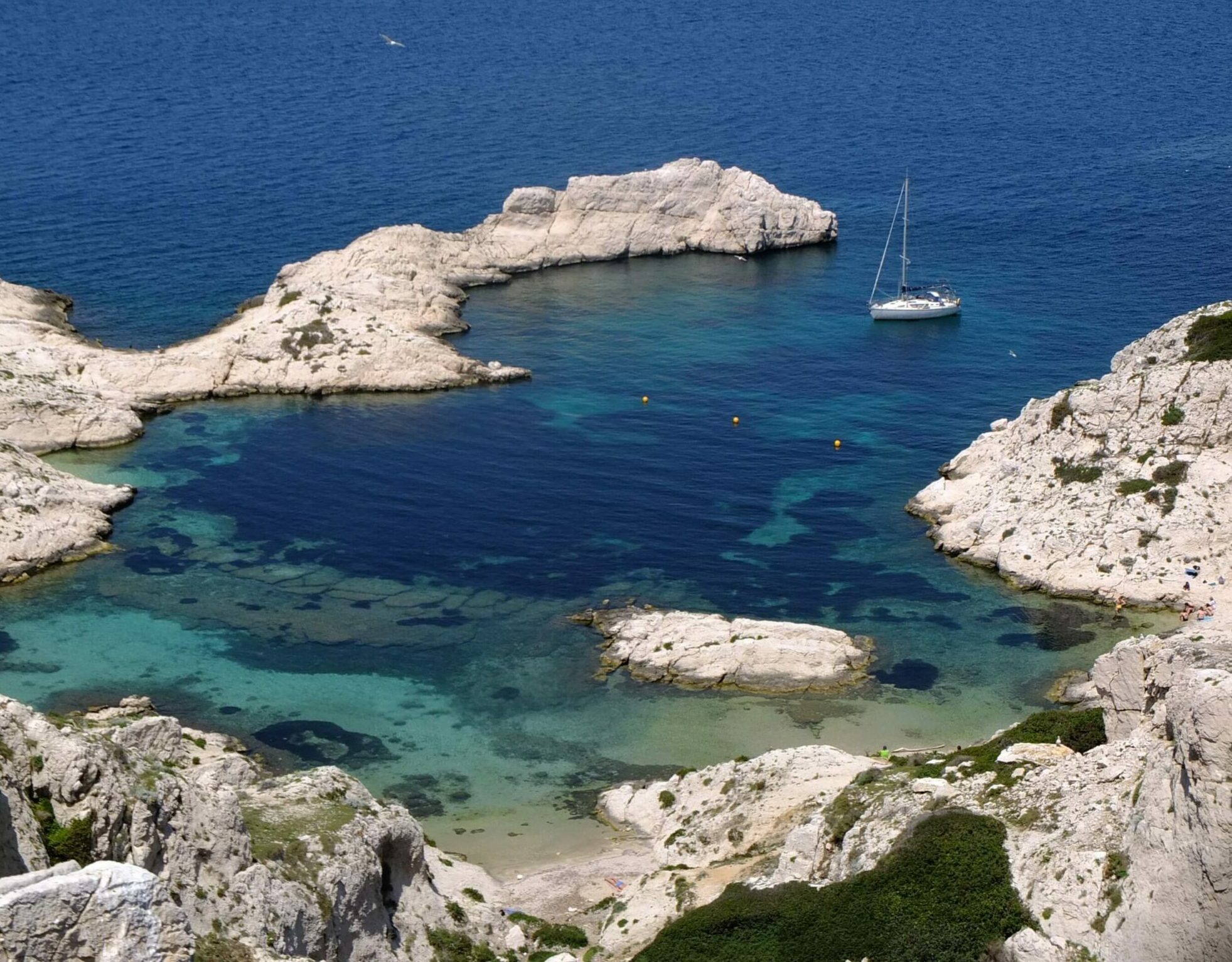
A first major site has been identified on the islands of the Frioul archipelago in Marseille, in the area covered by the Parc national des Calanques. Several locations are currently being studied, in line with a variety of pressures linked to fishing and yachting activities, while ensuring accessibility for the public.
Consultations are currently underway with the maritime authorities to validate the project’s implementation on public land.
The installation of test models on proprietary sites or private concessions on the rest of the coastline is also being considered, with the aim of maximizing the diversity of physical environments (mechanical constraints linked to waves, currents, etc.) and biological environments (living communities and habitat types) around the experimental buoys.
Phase III: monitoring the return of biodiversity around the reef (2023-2026)
Scientific monitoring of the colonization dynamics of the reef buoy and the repopulation of the surrounding seagrass beds can begin once the first iterations are launched.
First, it will enable experimental validation of the materials used: how resistant are they to environmental conditions? What affinity do marine organisms have for these substrates?
What’s more, beyond being a new submerged surface, the reef represents a new type of habitat. The floating reef buoy is isolated from the seabed (and the organisms that live there), and is specifically accessible to species living in open water (algae, planktonic larvae, juvenile and adult fish, etc.).
The monitoring program for these unprecedented biological communities will last several years, and will be marked by the pooling of data and results between all stakeholders, and the wide-scale publication of the project’s conclusions.
CALL FOR PARTNERS TO EXTEND EXPERIENMENTION
We want to increase the project’s impact!
The following developments are open to new funding partners:
EXPERIMENT
- Immersion of an experimental reef buoy in a location
- A day of on-site experimentation and immersion with scientists
INNOVATION
- R&D and technical engineering for the V3 reef buoy (continuous improvement)
- Manufacture of V3 reef buoy prototypes
AWARENESS – EDUCATION
- Creation of an educational underwater trail
- Design and installation of an exhibition on the partner’s premises
Contact Thomas 06 47 86 08 01 or Gwen 06 15 32 06 65
The team

Dr. Laurence Le Direach
Head of research and administration, GIS Posidonie, Institut Méditerranéen d'Océanologie, Marseille, France.

Olivier Bocquet
Architect for research and sustainable innovation at Rougerie + Tangram, Director of Tangram Lab, Marseille, France

Théo Jarrand
Architect, Lab Designer at Rougerie + Tangram, Marseille, France
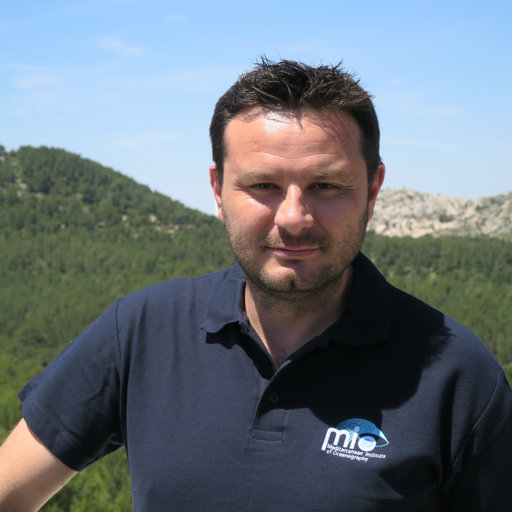
Dr. Thierry Thibaut
Phycologist and ecologist, teacher-researcher at the Institut Méditerranéen d'Océanologie, Marseille, France

Partners
Person
Title, organism
Institutional Partners
First name Last name
Université, structure, asso,...
First name Last name
Université, structure, asso,...
First name Last name
Université, structure, asso,...
News