, ,

Project news Yaf Keru Impacts
New from Yaf Keru Impact Project !

News straight from Indonesia to warm your heart at the start of this chilly year!

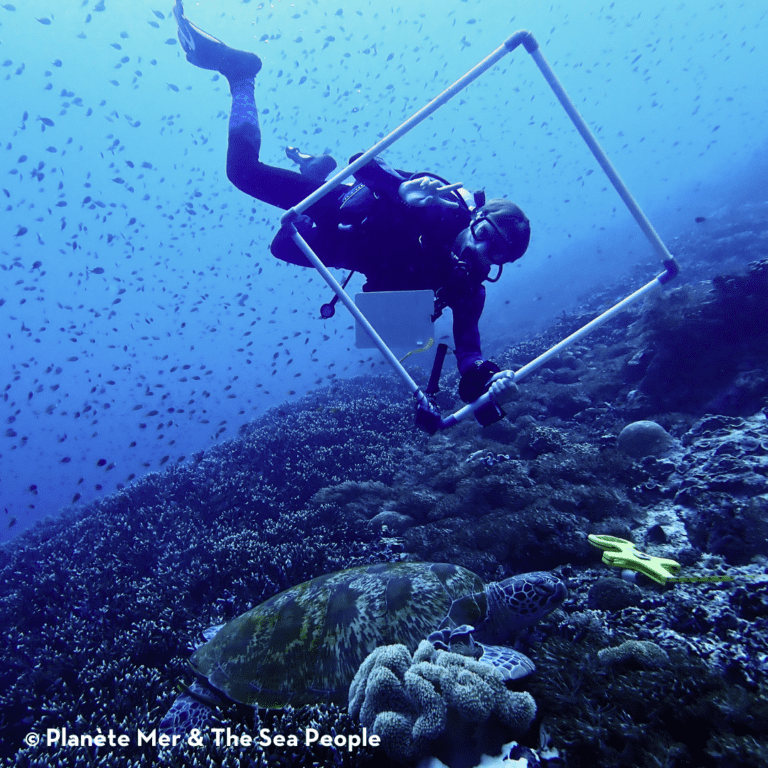
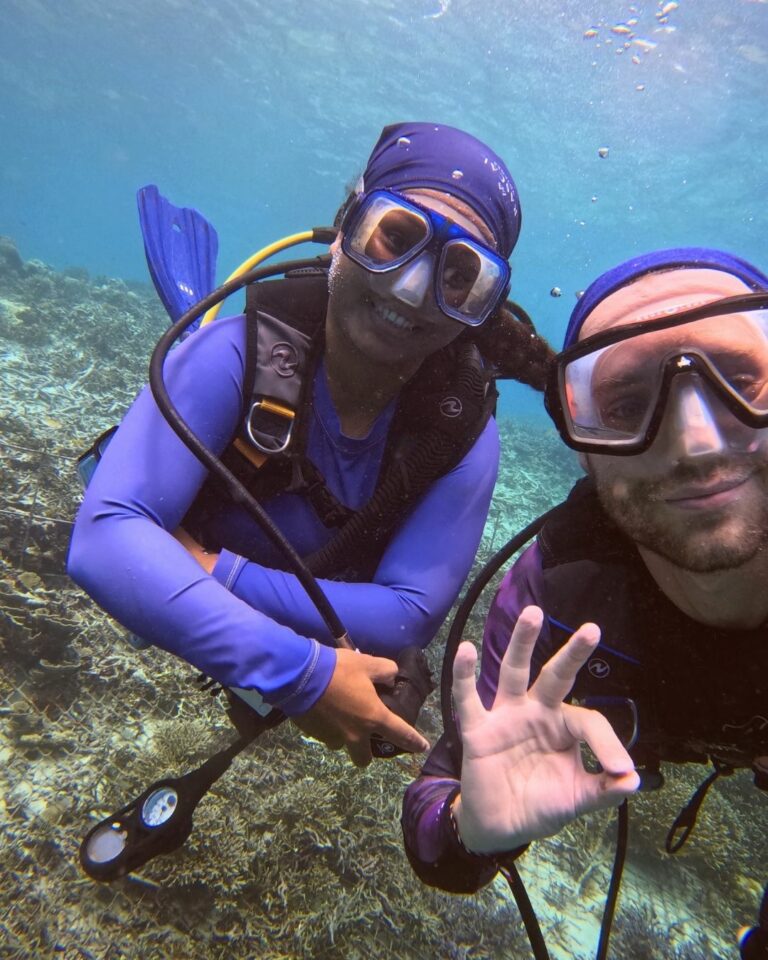
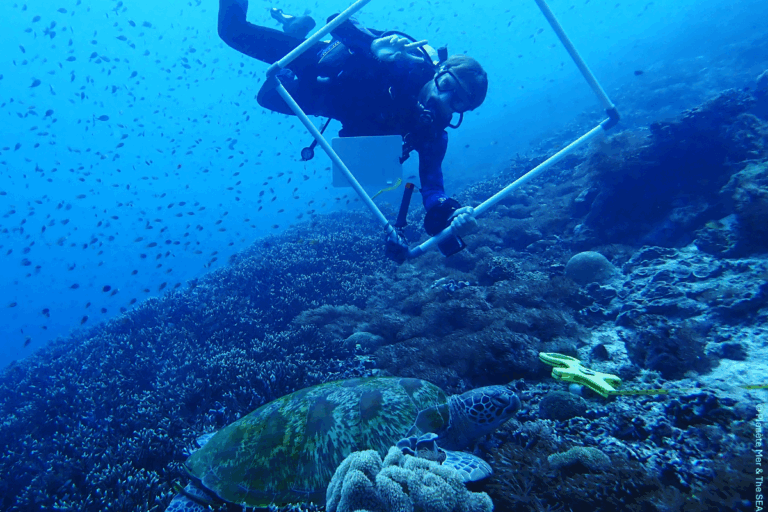
For the past two years, Mickael Racine, a PhD student in marine ecology at Planète Mer and the University of Montpellier, has been monitoring the corals of Raja Ampat, one of the richest marine biodiversity hotspots in the world. On site, he studies the success of coral restoration following destruction caused by destructive fishing methods, such as dynamite, and works closely with local communities through The Sea People. He tracks coral growth, species recolonization, and also observes impacts on local populations, including food security and tourism.

Thanks to your support, he has been able to carry out 141 scientific dives!

These dives cover three types of sites: unrestored areas, areas under restoration, and healthy sites never affected by dynamite fishing. He observes fish and corals at different stages of restoration.

Latest results: 380 fish species identified, with 2 to 3 times more fish on restored sites than on degraded reefs! Coral cover has increased from 13% to 46% in just 2 years.

Next steps for the remaining year: continue these analyses and process data on impacts at the level of local communities.

A true hope for this biodiversity jewel.

Important reminder: restoration must remain the last step, after pressures on the ecosystem have been removed, otherwise the new corals risk dying again.

, , , , ,

Can we still save corals in the face of global warming?

Can we still save corals in the face of global warming?

According to the latest Global Tipping Points Report from the University of Exeter, tropical coral reefs are dying on a massive scale.
➡️ Today, at +1.4°C, we have already crossed the critical threshold.

If we don’t reduce our emissions and reach +1.5°C, coral reefs will have a more than 99% chance of tipping, a point of no return for these essential ecosystems.

It is urgent to find more systemic and long-term solutions.

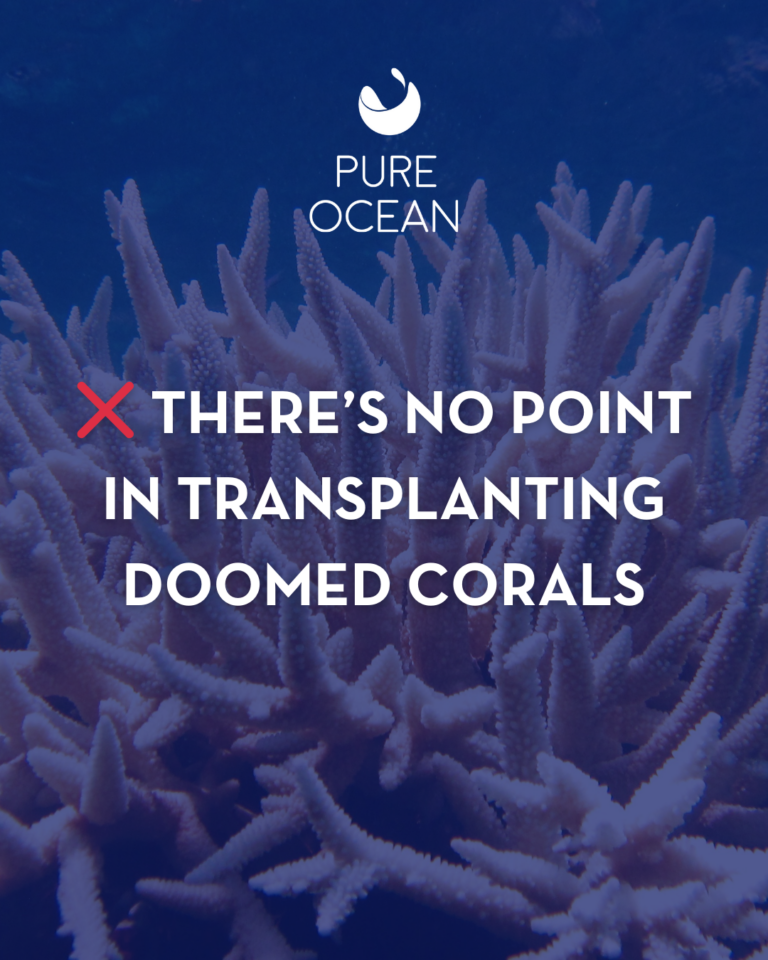
❌ There’s no point in transplanting doomed corals.

At Pure Ocean, we support scientific approaches that rethink reef restoration from the ground up:

💡 Reef Reborn: boosting coral reproduction with a lipid cocktail to increase larval survival rates. This also makes them more resilient to warming – UTS

🪶 Birds on Sticks: strengthening reefs by restoring the entire ecosystem, from corals to seabirds. More birds = more nutrients = healthier, more resilient corals – University of Essex

🧬 SymbioSwap: the first step in coral death is the loss of symbiotic algae due to heat. This project investigates whether warm-water algae could offer hope for the adaptation of temperate corals, such as those in the Mediterranean – University of Perpignan

🐠 Yaf Keru Impact: heat sensitivity is worsened by human pressures and destructive fishing practices. Yaf Keru Impact shows that by choosing more sustainable methods (no dynamite, no cyanide), reefs and the services they provide can come back to life – Planète Mer

🧭 It’s time to activate positive tipping points.

Every innovation, every project, every donation can help tip the balance in the right direction.

👉 Support the science that helps reefs adapt to climate change.

, ,

Mission coral: saving one of the planet’s most precious marine treasures.

Mission coral: saving one of the planet's most precious marine treasures.

In Raja Ampat, Indonesia, coral reefs are still biodiversity gems… but they are under threat.

Mickael Racine, a PhD student in marine ecology at Planète Mer / University of Montpellier, closely monitors the restoration of these reefs alongside local communities.

With the Yaf Keru Impacts project, he analyzes coral health, fish diversity, and the impact on local populations, demonstrating that protecting reefs also ensures food security for the inhabitants.

👉 A dive into a unique ecosystem, where science and communities work hand in hand.

, ,

PROJECT NEWS ✨ Yaf Keru Impacts

PROJECT NEWS ✨ Yaf Keru Impacts: a year rich in progress for the restoration of degraded coral reefs in Indonesia!

Thanks to your support, the Yaf Keru Impacts project, led by Mickael Racine and the Planète Mer association, is making remarkable progress in Raja Ampat. 🐠

➡️ Their aim? To show that restoration can restore coral cover and an abundance and diversity of fish.

🔬 3 contexts, 3 different situations to measure the impact of restoration

The project is based on a comparison of 3 conditions at key sites:

A context degraded by dynamite fishing
An intact context
A selection of reefs at different stages of restoration
👉 Highlights of this first year :

Data collection: Rigorous monitoring (growth measurement and counting) along standardised dive routes, repeated several times to observe the evolution of the sites over time.
Essential collaboration with local communities: Partnership with local researchers and members of the local community to ensure the sustainability and co-construction of the project with citizens.
Analysis of results: The initial results are very promising. As early as 6 months ago, we saw a significant return of coral and fish, proving the direct link between the ecological state of the reefs and the abundance of fish.
Disseminating the results: Fête de la science, seminars, and the creation of a science popularisation kit to make these advances accessible to everyone.
🙌 An impact that goes beyond science:

This project does more than just restore coral reefs: it supports local communities by guaranteeing them food security and economic prosperity.

🙏 These advances are possible thanks to YOU. Your donations advance research, protect our planet and support forward-looking projects.

Thank you for working with us to protect these unique ecosystems.