Identify promising microbiota within sponges for the development of an innovative plastic pollution remediation process.
The SPO-Plastic project
CONTEXT AND MAIN ISSUES
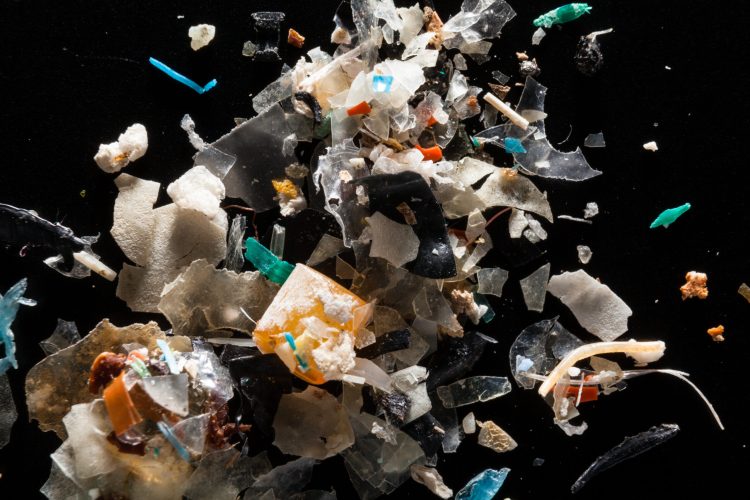
Plastic waste represents one of the greatest threats currently facing the ocean. Its amount in the marine environment is expected to increase tenfold by 2025, intensifying pressure on ecosystems and food chains.
Les micro‑plastiques représentent une fraction largement « invisible » de cette pollution, mais leur abondance ne cesse d’augmenter. Ils sont désormais intégrés aux réseaux trophiques marins, avec des conséquences encore mal connues sur la biodiversité et la santé humaine.
Another equally invisible aspect lies in the fact that plastics, when in contact with seawater, can release chemical compounds, particularly dissolved organic compounds, that may interfere with natural biogeochemical cycles and the microbiota of marine organisms.
Another equally invisible aspect lies in the fact that plastics, when in contact with seawater, can release chemical compounds, particularly dissolved organic compounds, which may interfere with natural biogeochemical cycles and the microbiota of marine organisms.
GOALS
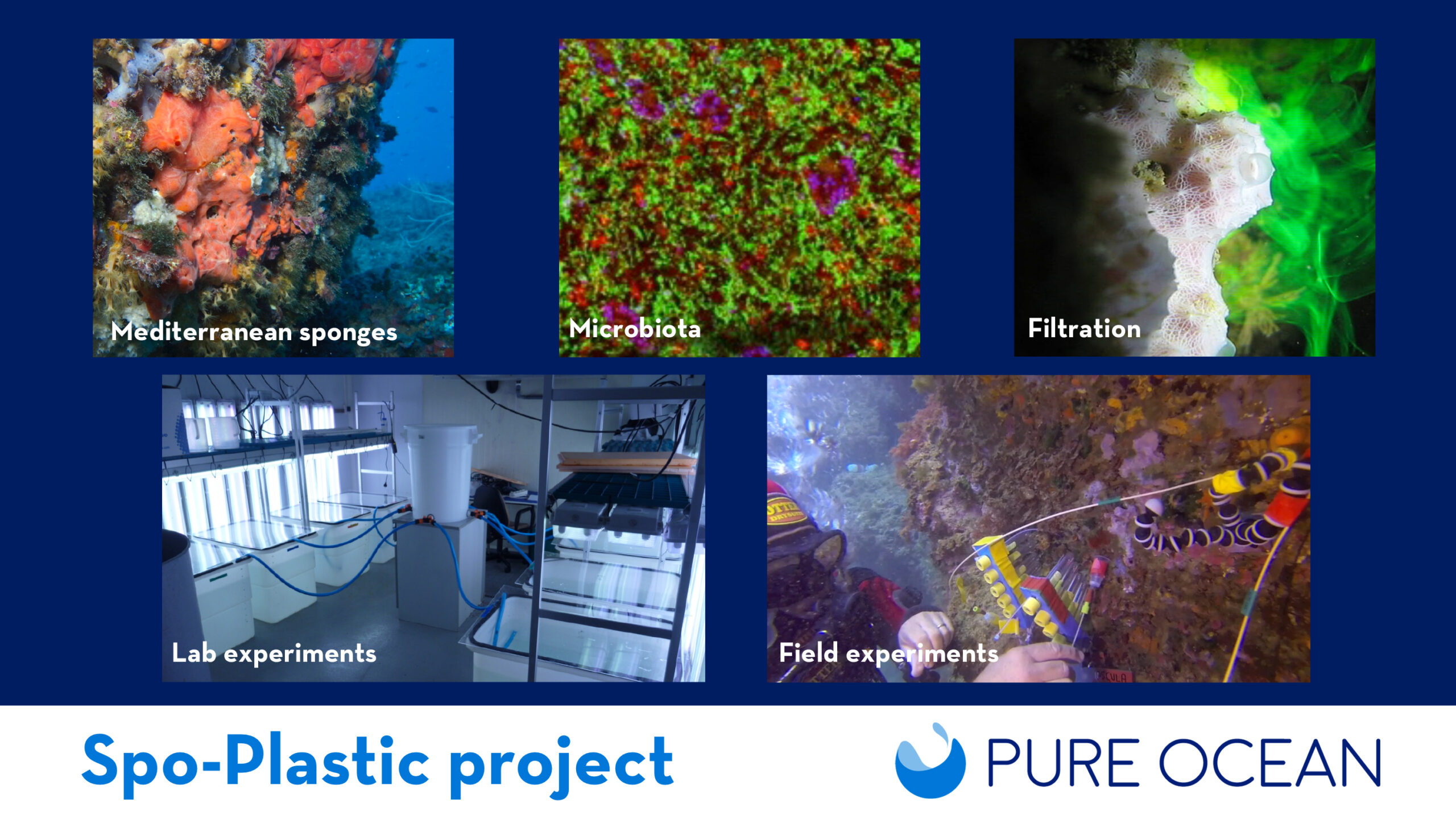
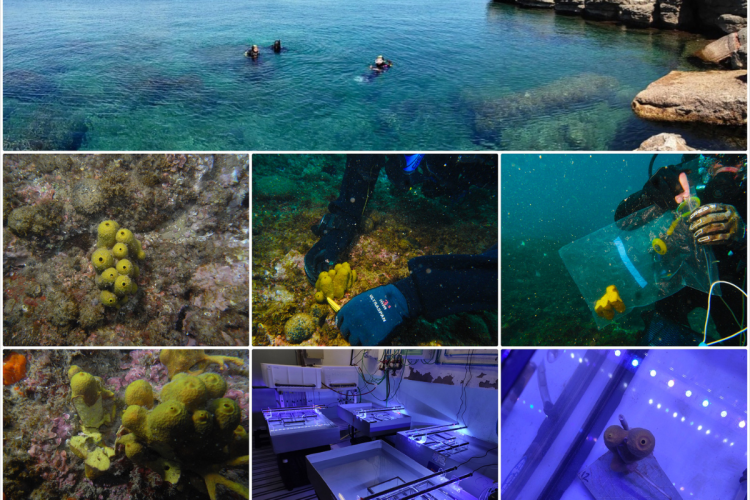
Determine the capacity of certain marine sponges to filter and degrade microplastics present in seawater.
METHOD
The SPO‑Plastic project is based on two complementary research axes carried out directly in the natural environment.
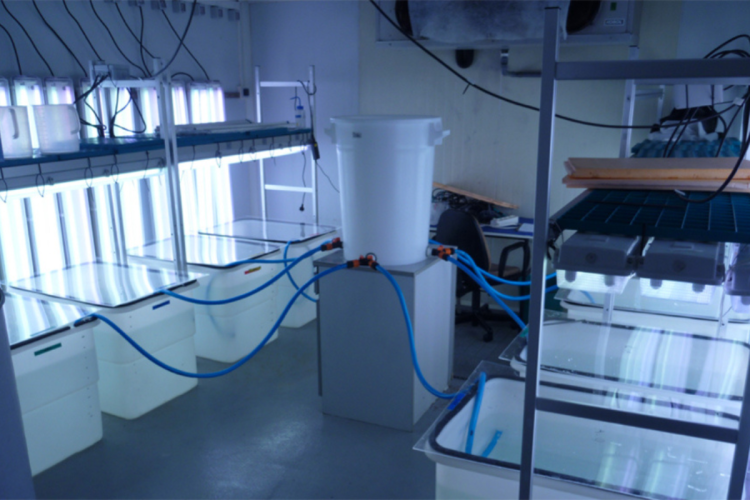
The first focuses on assessing the ability of sponges to process dissolved organic carbon derived from the leaching of microplastics, and on analyzing the potential changes induced within their associated microbial communities. This approach makes it possible to explore interactions between plastic pollution, the microbiota, and biogeochemical cycles.
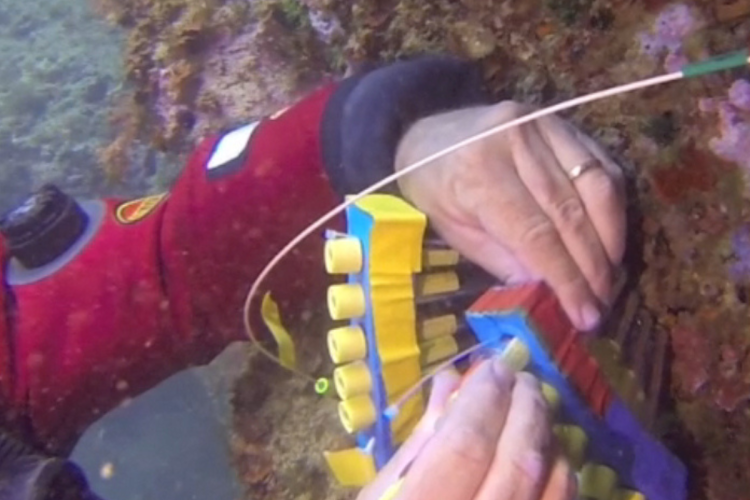
The second axis aims to design and test an in situ method to quantify the capacity of sponges to extract microplastics from the water column. This experimental protocol will make it possible to directly measure, in the ocean, the role of sponges in mitigating this pollution.
HOW IS THIS PROJECT INNOVATIVE?
SPO‑Plastic addresses plastic pollution from a still little‑explored perspective, focusing not only on microplastics themselves, but also on the dissolved chemical compounds they release into seawater.
The project innovates by studying the role of marine sponges as natural agents in the recycling of these compounds and microplastics, and by developing an in situ method to quantify this filtration capacity.
It thus highlights a nature‑based solution, emphasizing the potential of sponges and the ecosystem services they provide to sustainably mitigate the effects of plastic pollution.
LOCATION




NEWS
Project duration
2019 – 2021
SUSTAINABLE DEVELOPMENT GOALS
Results and advances
Coming soon
Step 1
Lorem ipsum dolor sit amet, consectetur adipiscing elit. Ut elit tellus, luctus nec ullamcorper mattis, pulvinar dapibus leo.
Lorem ipsum dolor sit amet, consectetur adipiscing elit. Ut elit tellus, luctus nec ullamcorper mattis, pulvinar dapibus leo.
étape 2
Lorem ipsum dolor sit amet, consectetur adipiscing elit. Ut elit tellus, luctus nec ullamcorper mattis, pulvinar dapibus leo.
Lorem ipsum dolor sit amet, consectetur adipiscing elit. Ut elit tellus, luctus nec ullamcorper mattis, pulvinar dapibus leo.
étape 3
Lorem ipsum dolor sit amet, consectetur adipiscing elit. Ut elit tellus, luctus nec ullamcorper mattis, pulvinar dapibus leo.
Lorem ipsum dolor sit amet, consectetur adipiscing elit. Ut elit tellus, luctus nec ullamcorper mattis, pulvinar dapibus leo.
The team
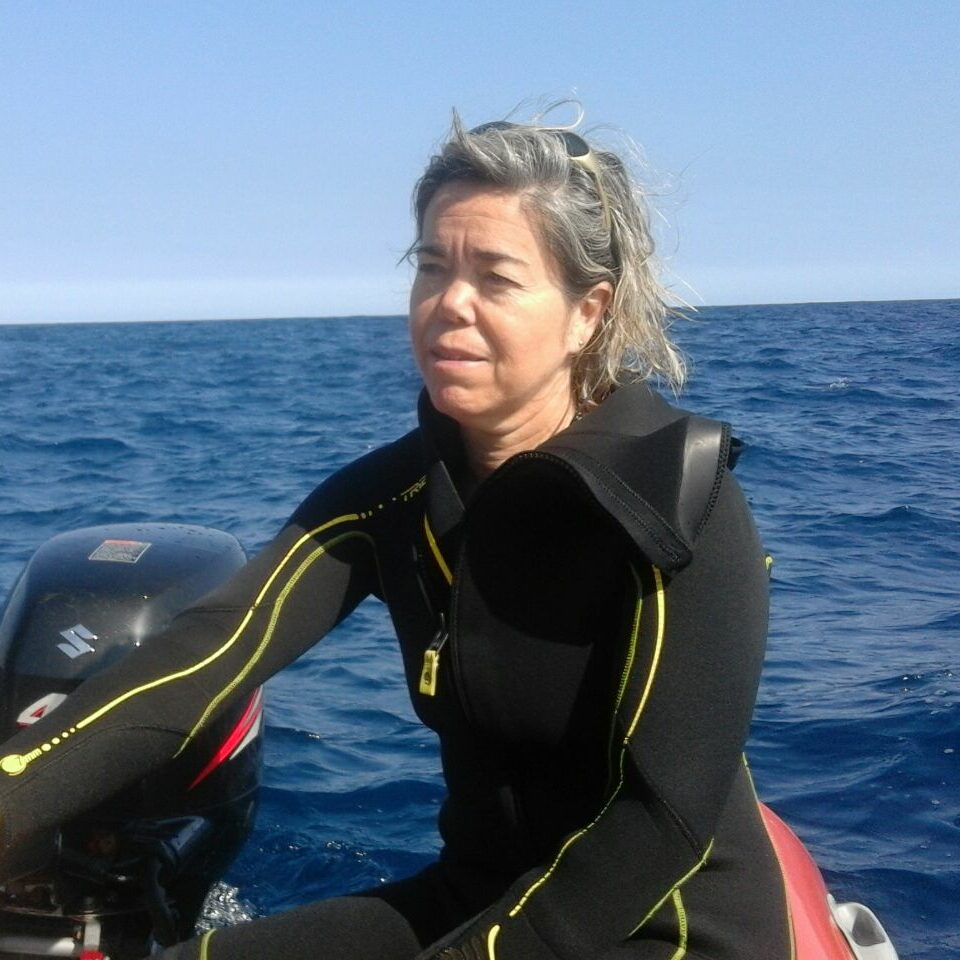
Marta Ribes
Consejo Superior de Investigaciones Cientificas (ICM-CSIC)
Partners
Rafael Coma
Centre d’Estudis Avançats de Blanes CEAB-CSIC
Ute Hentschel
GEOMAR
Lucia Pita
GEOMAR
Cristina Romera-Castillo
ICM-CSIC
Institutional Partners
First name Last name
Université, structure, asso,...
First name Last name
Université, structure, asso,...
First name Last name
Université, structure, asso,...