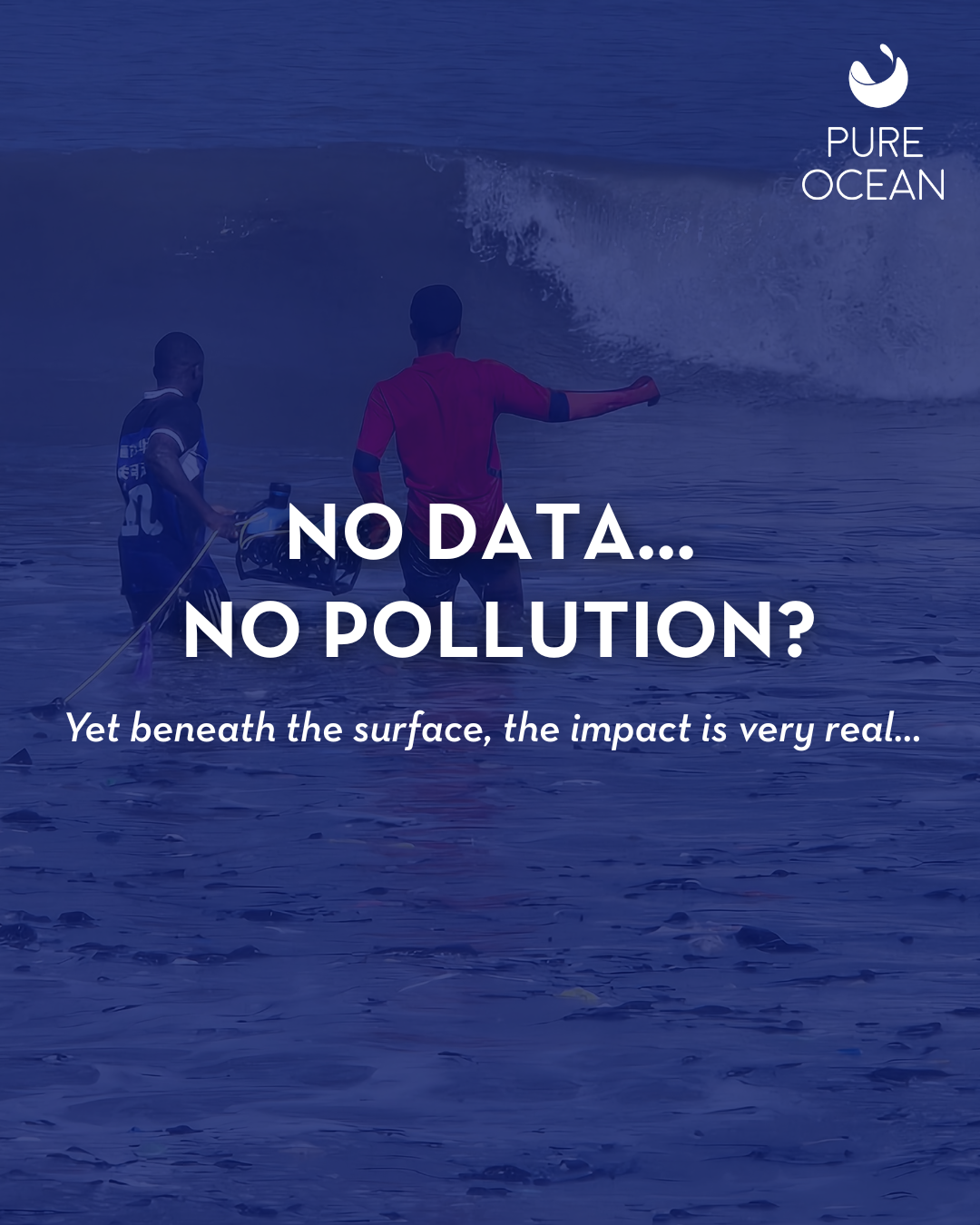
❌ How do you fight what you can't see?
In recent weeks, the Shein scandal has once again highlighted the dark side of fast fashion:
massive overproduction on the other side of the world, opaque and unethical practices, chemical substances, and clothes designed not to last.
‼️ And the disaster doesn’t stop at our closets.
In Accra, Ghana, the largest second-hand clothing market in the world receives 15 million garments each week from Northern countries. 🐢 A large portion is unsellable and ends up in the Korle Lagoon, polluting the seabed, destroying turtle habitats, and severely impacting the lives of local residents by contaminating their environment and threatening their livelihoods.
You’ve probably seen the images of beaches overrun with clothes—now imagine everything under the water…
➡️ And yet we do nothing. Why?
From the surface, this underwater pollution is invisible.
When a phenomenon cannot be seen, measured, or quantified…
👉 it does not exist in the eyes of policymakers.
In short: no data = no problem.
Yet the urgency is very real.
This is where science and technology make a difference.
The ALT-Waste project, supported by Pure Ocean, uses an autonomous underwater robot to map this textile pollution and measure its real impact on biodiversity.
💙 Join Pure Ocean and support the research that reveals the invisible.
👉 Learn more about the project: https://www.pure-ocean.org/nos-projets/alt-waste/